Select page
Fine Art Giclée Print Giclée  Hahnemühle Photo Rag® Satin

Fine Art Giclée Print Giclée Hahnemühle Photo Rag® Satin
The Face as Territory: Portraits on Hahnemühle Photo Rag® Satin

There is a tension inherent in every photographic portrait: asking the paper to hold a gaze without turning it into glass. Hahnemühle Photo Rag® Satin Hahnemühle precisely on that boundary, where portrait photography ceases to be a reflective surface and begins to behave like skin. A satin-matte finish on 100% cotton, capable of restoring the face’s depth without robbing it of its quietness.

Photo Rag® Satin is neither a true matte nor a high-gloss finish. And that is precisely why it is so well-suited for portraiture.

Icons: From the Flamenco Workshop to a Contemporary Perspective

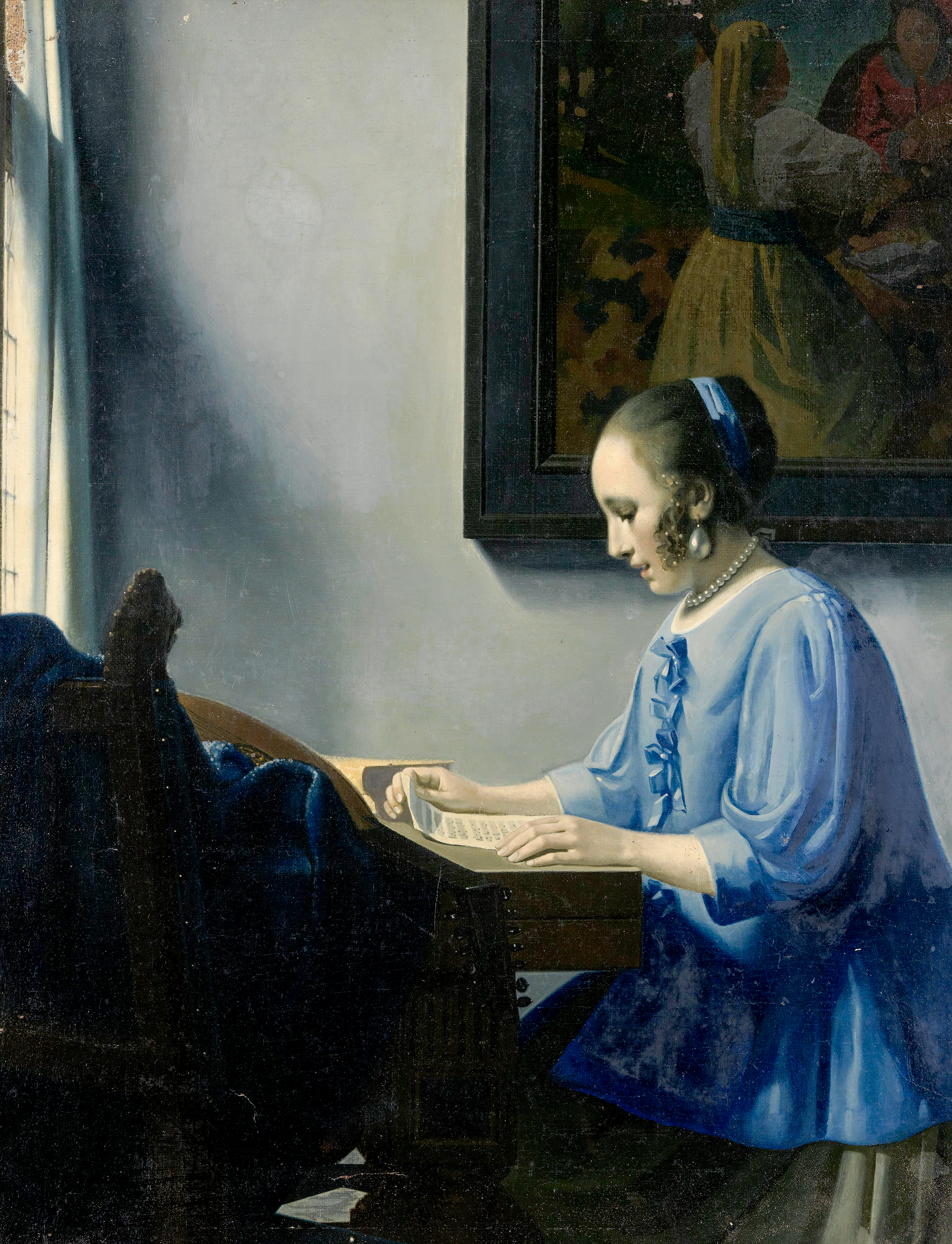
Portraiture has been grappling with the material for centuries. Rembrandt built up the face with impasto, allowing light to sink into the thick oil paint; Vermeer, on the other hand, sought an almost glass-like surface for *Girl with a Pearl Earring*. Photography inherited that dialectic. Julia Margaret Cameron’s fluid portraits on albumen paper coexisted with the gum bichromate prints that Edward Steichen used to humanize Rodin.

Today, when an artist like Paolo Roversi prints on cotton, or when Irving Penn sought the nobility of traditional media for his *Small Trades*, the choice is never merely decorative. The finish determines how the viewer engages with the face: whether they remain on the outside, looking at a polished object, or allow themselves to penetrate the paper.

Photo Rag® Satin is part of a tradition that shuns flashiness. It offers depth without excessive gloss, and contrast without harshness. It is the portrait paper that doesn’t need to shout to be remembered.

The truth of the matter

Behavior of pigmented inks

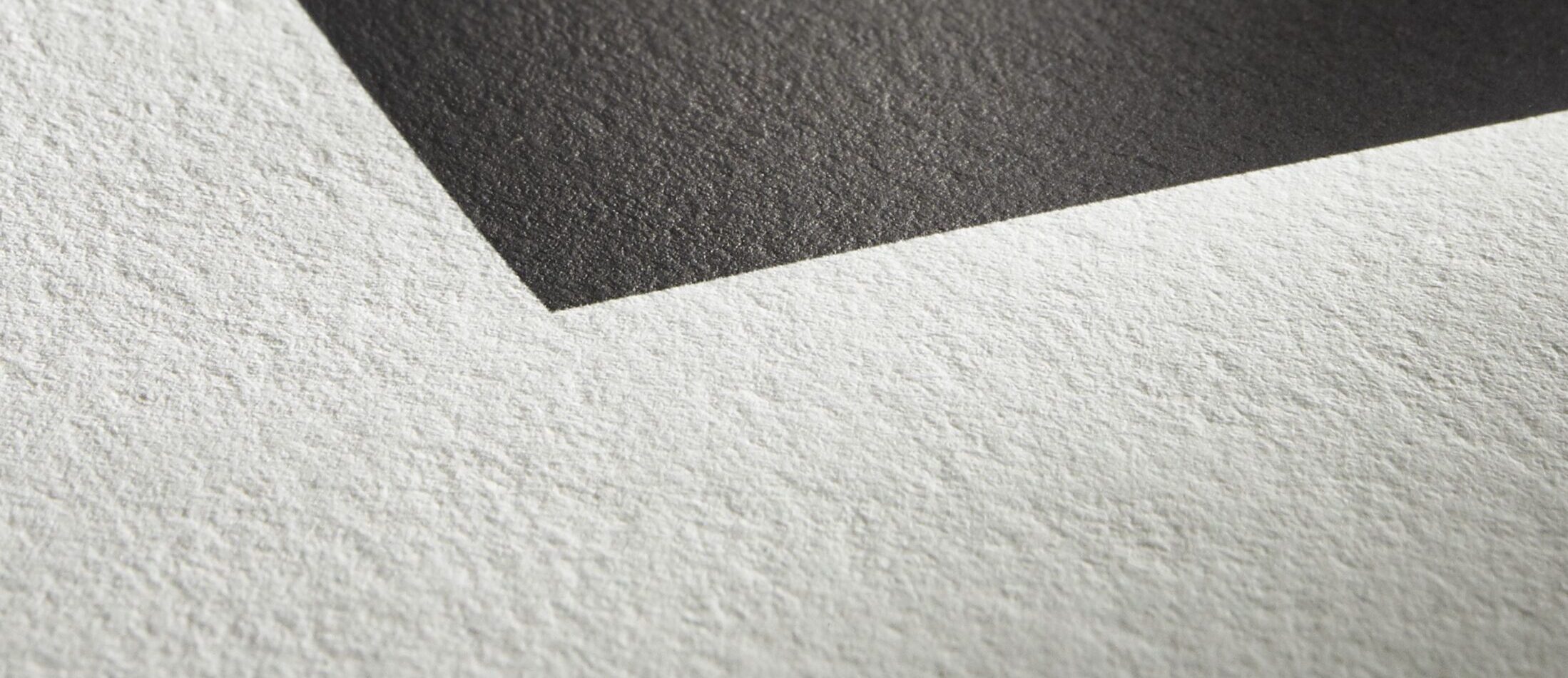
Photo Rag® Satin features a unique coating within the Hahnemühle range: the printed area has a subtle satin sheen, while the unprinted area retains a matte finish. In practice, this means that pigmented inks are deposited with very high density, achieving a remarkable D-Max for a cotton paper, without sacrificing the warmth of the substrate.

In portraiture, this translates to precise tonal transitions in the skin—from the light bouncing off the bridge of the nose to the mid-tone of the cheekbone—without the flatness that a pure matte finish sometimes produces. The acutance remains strong: the eyelashes, pores, and nuances of the iris are clearly visible, but without the harsh sharpness typical of glossy baryta paper. Black-and-white gains depth; color portraits regain the skin’s natural warmth—that boundary between pink and olive that is so often lost on overly vivid surfaces.

Basis weight and storage (ISO 9706)

We’re talking about 310 g/m² of pure cotton fiber, produced using the round-mold (mold-made) process, acid-free and lignin-free, in compliance with the ISO 9706 standard for museum-quality paper. That dimensional stability is not merely a decorative feature: it is what ensures that a portrait printed today will remain identical forty years from now, without yellowing, without color shifts, and without structural fatigue in the fiber. It is the unspoken guarantee offered by a high-quality substrate when working with the Fine Art Giclée process.

The finishing option: Photo Rag® Baryta

The choice of paper is always an artistic decision, and Photo Rag® Satin has a counterpart within the same family: Photo Rag® Baryta (315 g/m², 100% cotton, high gloss). While Satin offers a subdued finish—a matte satin—Baryta embraces the luminosity of analog baryta, with the depth characteristic of gelatin-silver photographic paper. Same fiber, same traceability, same warmth of natural white, but a radically different response to light.

When should you choose each one? Satin is ideal for intimate portraits, serene studio shots, and understated editorial work where the skin needs depth without glare. Baryta is best suited for portraits with dramatic high contrast, black-and-white images that demand almost liquid blacks, and images meant to dominate a wall. There is no “right” paper—only a paper that aligns with the photographer’s vision.

The workshop as a meeting place

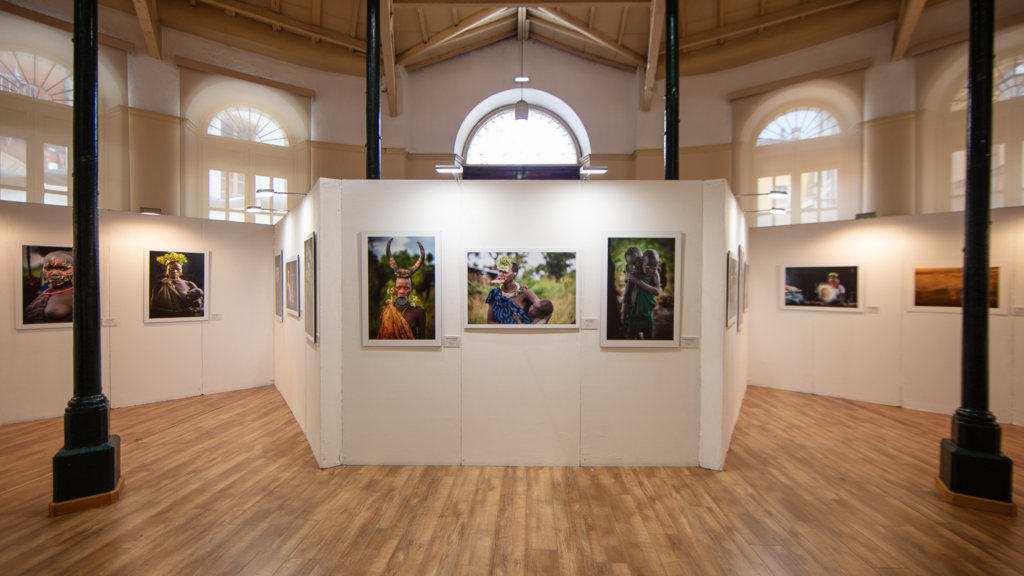
At Color3arteHahnemühle in Oviedo (Asturias)— each portrait is reviewed with the artist before the substrate is selected. The raking light on the print proof reveals things no screen can show: the texture of the cotton, the way the ink settles in the midtones, the harmony between intention and material.

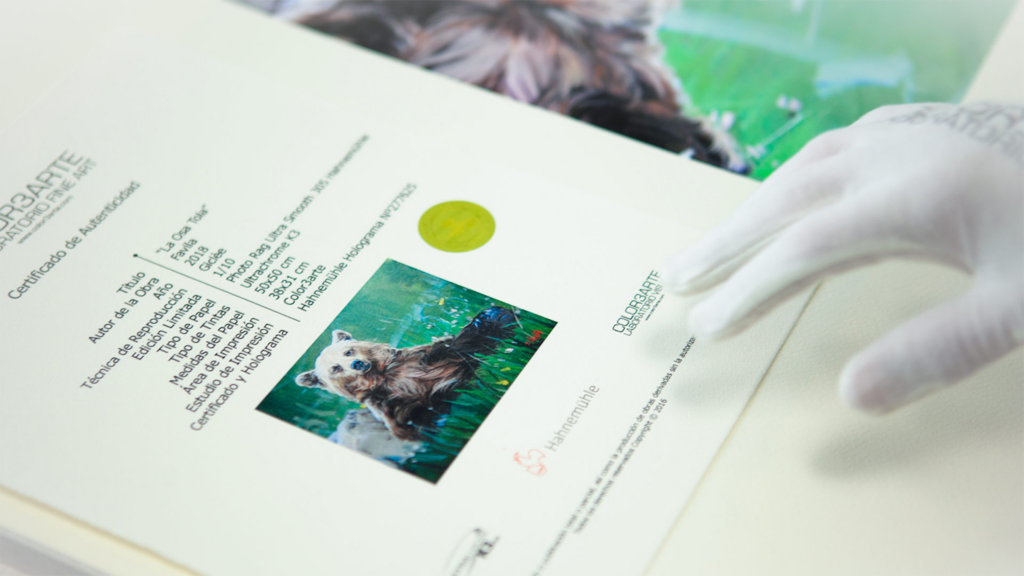
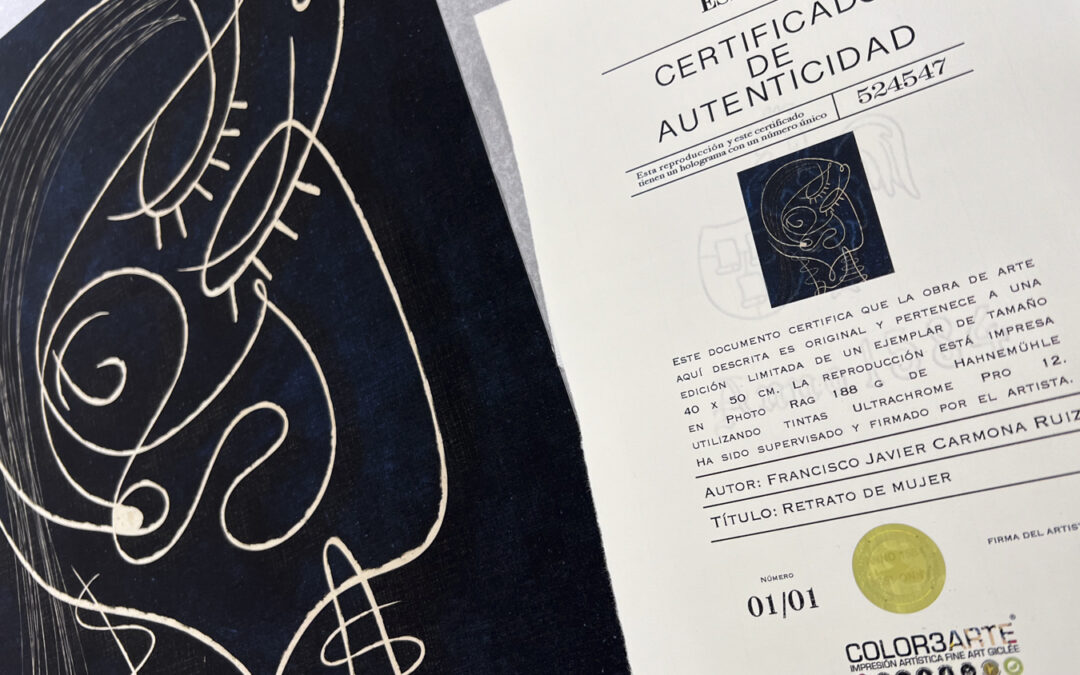
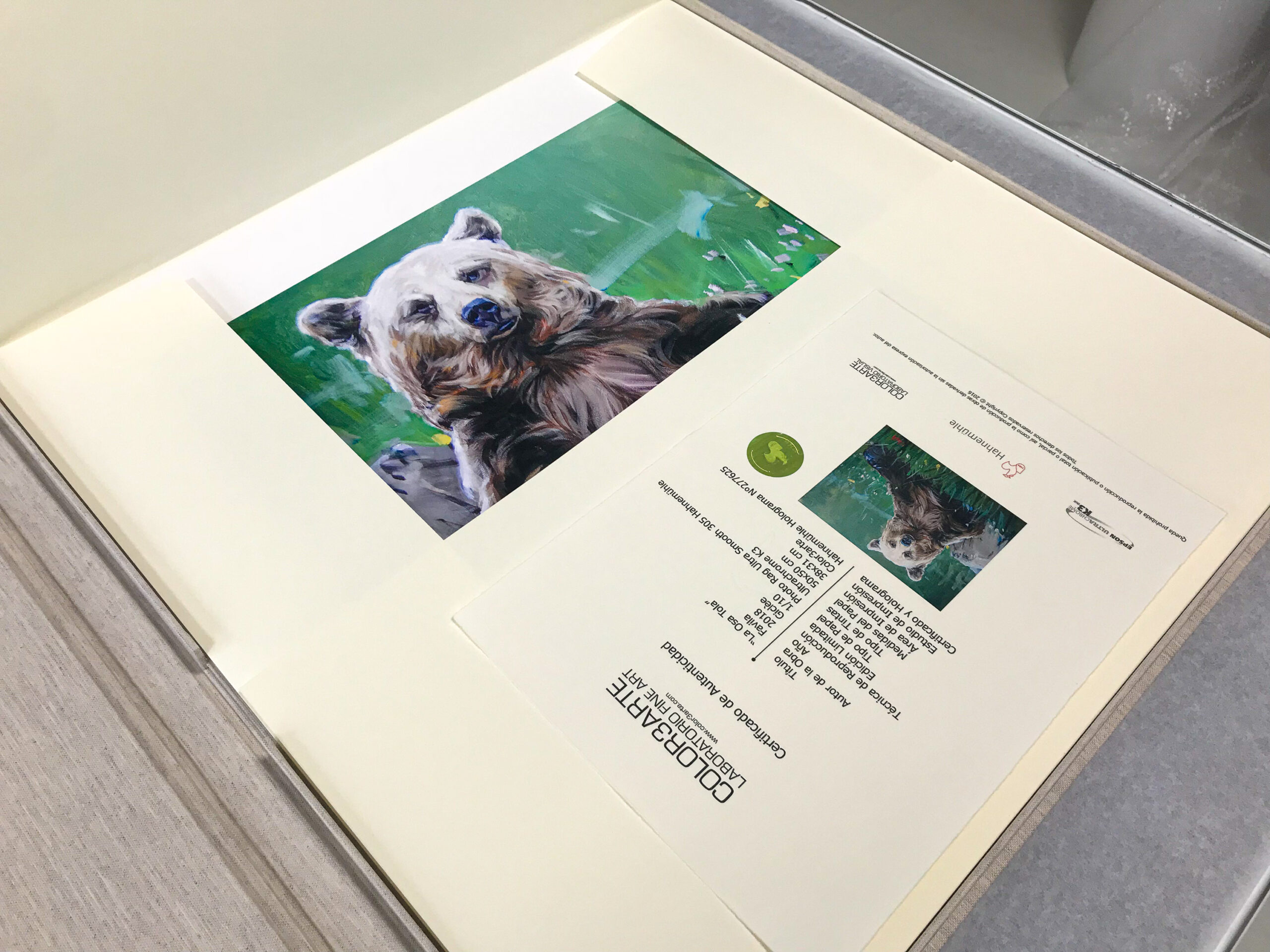
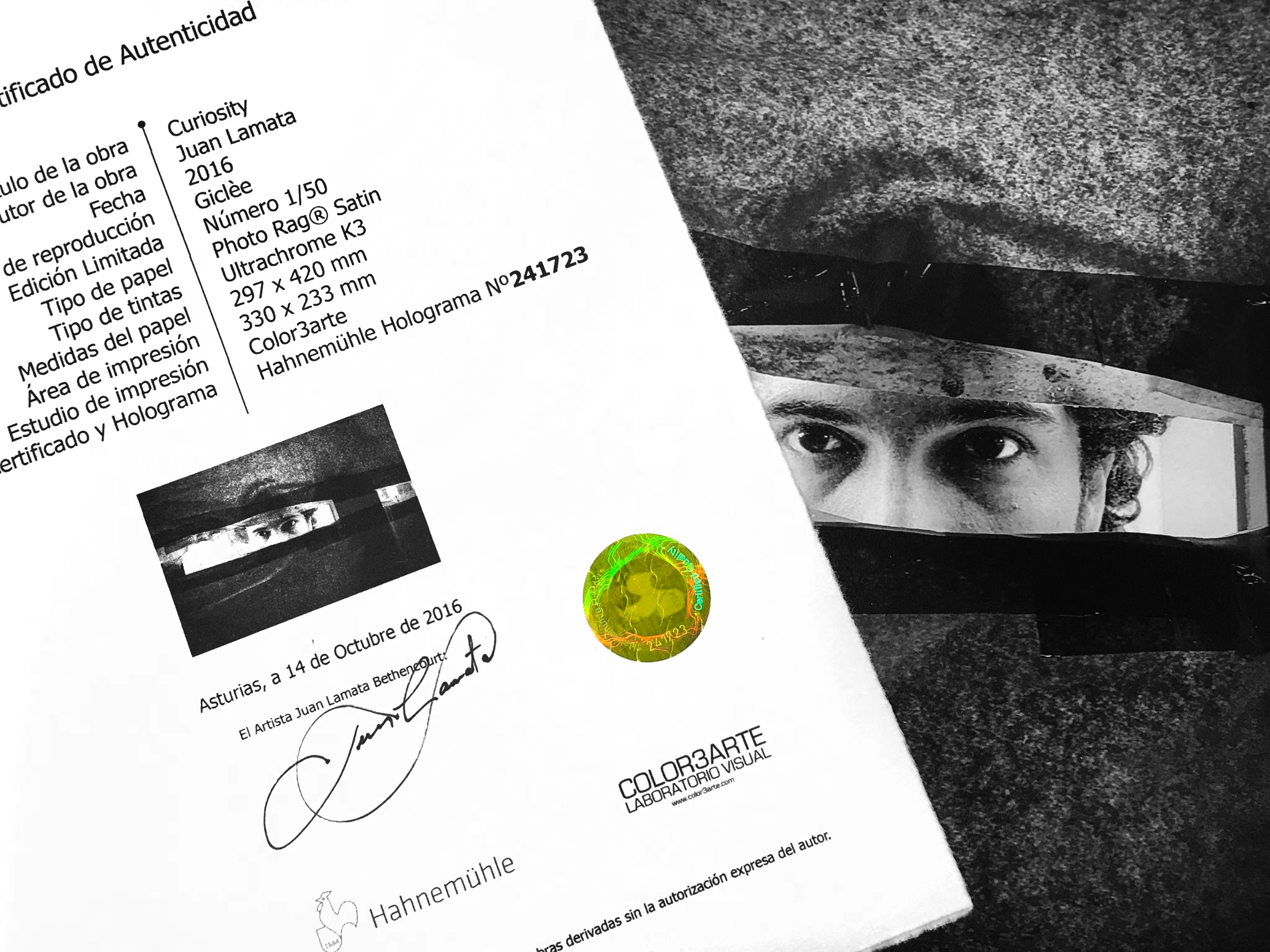
Every unique piece or limited edition that leaves the studio includes traceability via a Hahnemühle hologram Hahnemühle , upon the artist’s request, a Digital Authentication Chip (CAD) via NFC: a guarantee of origin that protects both the artist and the collector alike. If your project is a portrait and you’re torn between the silence of Satin and the body of Baryta, let’s talk. That conversation, with the paper on the table, is where the printing process truly begins.
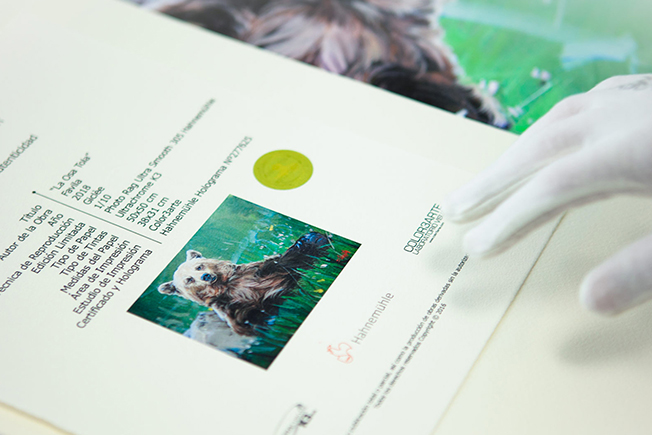
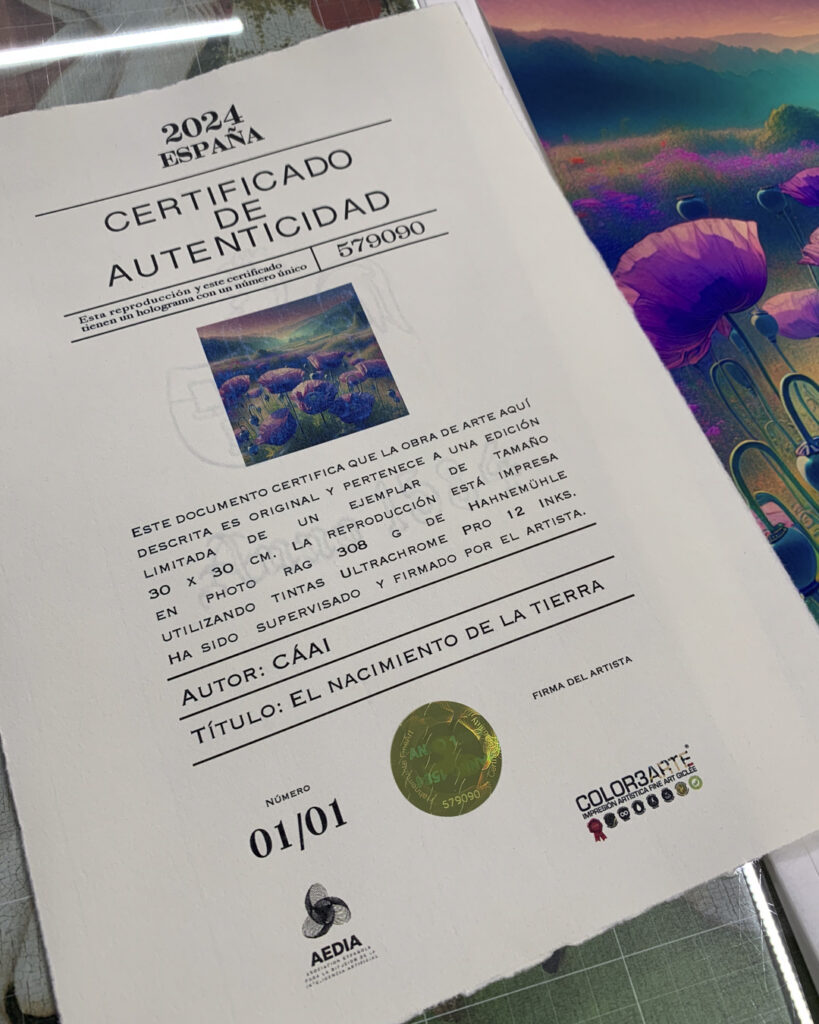
Monoprints: 1/1. It’s not a limited edition—it’s an original, unique, and certified work of art.

Monoprints: 1/1. It’s not a limited edition—it’s an original, unique, and certified work of art.

Monoprints 1/1 — original, unique, and certified artwork

Monoprints are unrepeatable impressions: a single combination of gesture, ink, and substrate gives rise to the image. Inspired by the explorations of Edgar Degas, Mary Cassatt, and Paul Gauguin, these works bring into the present — and into the digital realm — the ambition to create absolutely unique graphic artworks.

What is a monoprint?

A monoprint is the synthesis of graphic art and a unique piece: from a single file — digital art, photography, or the digitization of a classical work — one single Fine Art pigment print (1/1) is produced, signed, certified, and supported by the artist’s written commitment never to produce another print with identical visual characteristics. In this way, the file becomes an art object, and that sole exemplar is consecrated as an absolute and unrepeatable original.

At Color3arte we produce 1/1 monoprints to Fine Art standards for collectors: we manage file preparation and color workflow, select papers of maximum permanence, and apply a final verification process with robust certification.

What is the value of a monoprint?

Unrepeatable original — only one exemplar exists, reserved for the collector.

Authorial intent — not a “copy,” but conceived from the outset as a singular work.

Technical excellence — file preparation, color management, substrate selection, and proofing are handled with rigorous Fine Art standards.

Guarantee and traceability — a physical certificate and NFC registration safeguard the artwork and its ownership.

How a Fine Art Monoprint Is Produced at Color3arte

A serious monoprint cannot be reduced to “just printing.” For a 1/1 artwork to be coherent, stable, and collection-ready, the workflow is structured around four core stages.

1) File Preparation

We review the elements that genuinely affect the final result: effective resolution, gradient integrity, color space consistency, and precise control of shadows and highlights to prevent shadow blocking or highlight clipping.

2) Color Management and Soft Proofing

The objective is precise: to predict how the image will behave on the selected paper. Soft proofing enables technically informed adjustments while preserving chromatic fidelity and respecting the inherent character of the paper.

3) Paper Selection

Paper is not a neutral support. It defines texture, micro-contrast, perceived saturation, and—critically—the reading of black values.
For monoprints, we work with Hahnemühle vegan Fine Art papers, a compelling choice when environmental coherence is also a priority.

4) Printing and Final Verification

The print is evaluated under controlled lighting conditions, assessing what truly matters: uniformity, shadow detail, neutrality, and chromatic consistency. The objective is a gallery-grade result—stable, refined, and archivally sound.


Hahnemühle Vegan Fine Art Paper: Quality, Longevity, and Coherence

Hahnemühle states that its papers are vegan and that this decision has been part of its manufacturing philosophy for decades: internal and surface sizing do not rely on animal gelatins, but on synthetic compounds.

In practical terms, for a monoprint this translates into:

  • Surface quality and tactile presence — a tangible sense of the artwork as object.

  • Color rendering — texture and coating influence how the pigment interacts with the paper surface.

  • Deep blacks and micro-detail — particularly valuable in photography, painting, illustration, and comic art.

  • Archival orientation — substrates designed according to stability and aging-resistance criteria.


Water-Based Pigment Inks: Color, Definition, and Stability

For Fine Art monoprints produced using the giclée process, the professional benchmark is water-based pigment inks.

They deliver clean color, fine detail, and long-term stability when paired with appropriate Fine Art papers. The result is an image with stronger presence: deep blacks, smooth tonal transitions, and a distinct object-like quality.

Epson, for example, defines UltraChrome PRO12 as a water-based pigment ink system—highly regarded in Fine Art printing for its precision and conservation-oriented performance.


Visible Quality: Color, Deep Blacks, and Dmax

In a monoprint, viewers typically perceive two elements before anything else: color richness and black depth.

  • Color — not merely saturation, but cleanliness, coherence, and smooth tonal transitions.

  • Black and Dmax — a high Dmax value ensures deep blacks with presence while preserving shadow detail, enhancing volume, legibility, and visual impact.


Durability and Conservation: A 1/1 Artwork Is Made to Last

A monoprint is conceived as an artwork, and its longevity depends on the entire system—file, ink, paper, and handling conditions. Simple guidelines make a substantial difference:

  • Avoid direct sunlight or aggressive spot lighting.

  • Maintain stable humidity and temperature conditions.

  • Handle with gloves or by clean edges only.

  • Frame using archival-grade materials

Monoprints

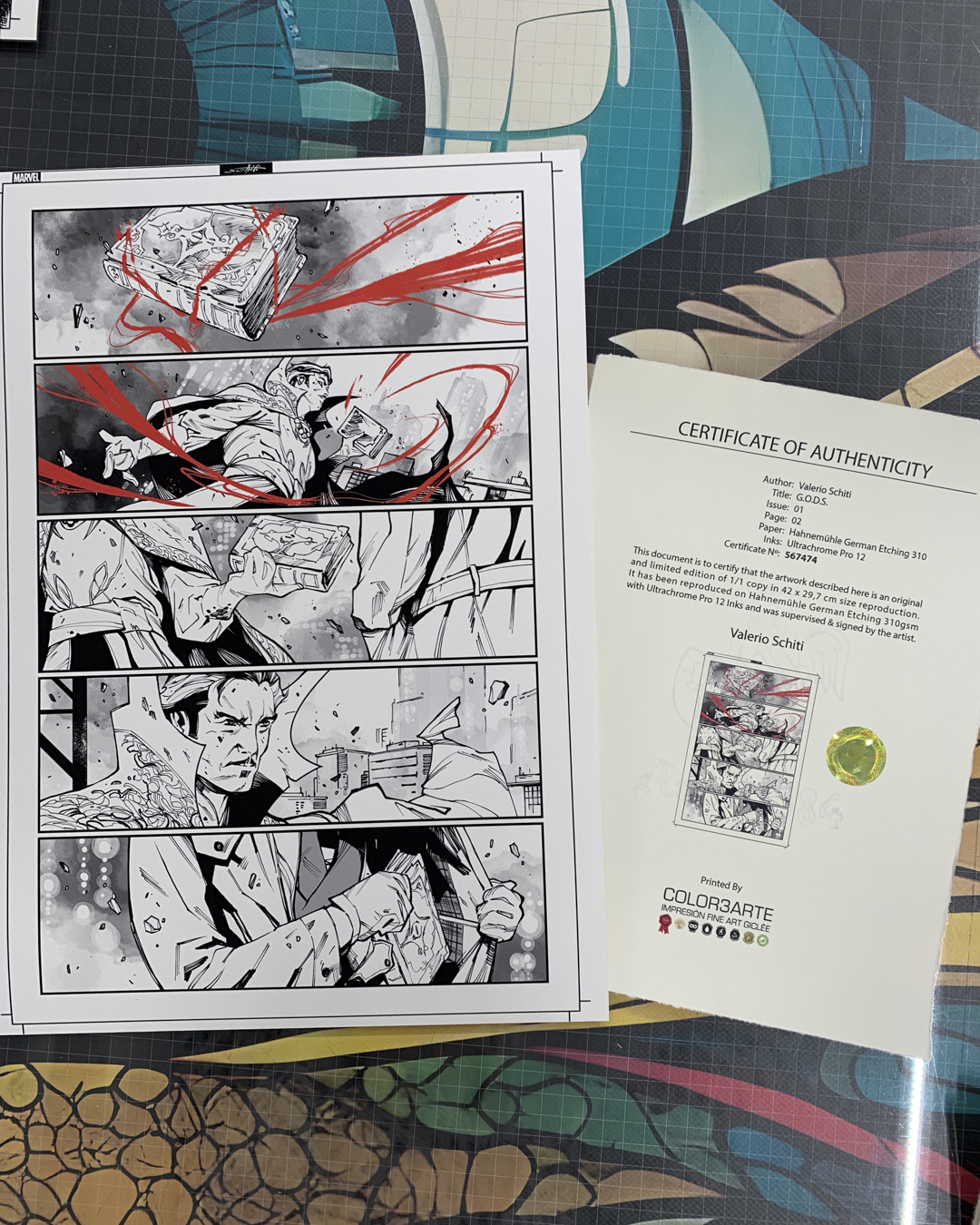
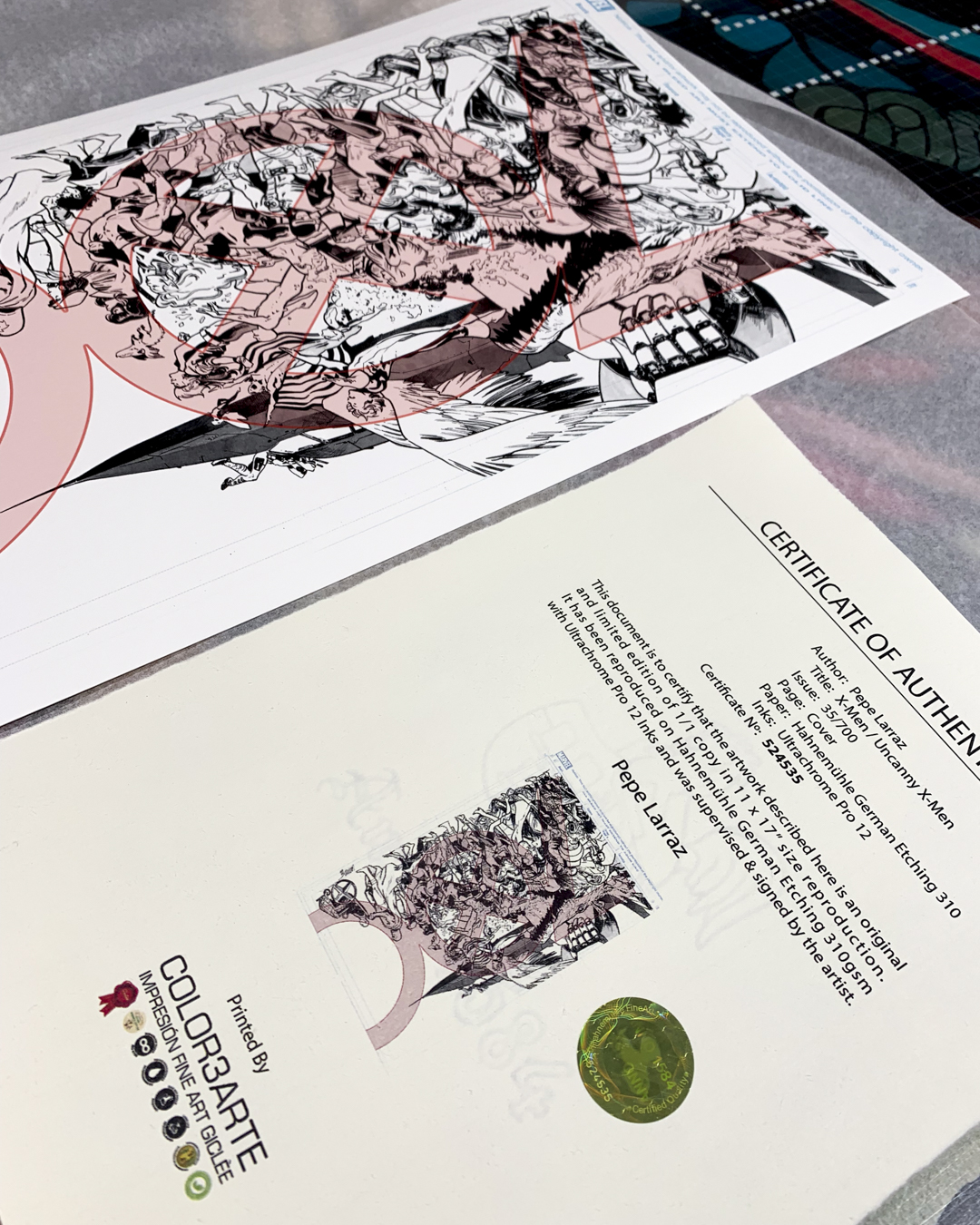
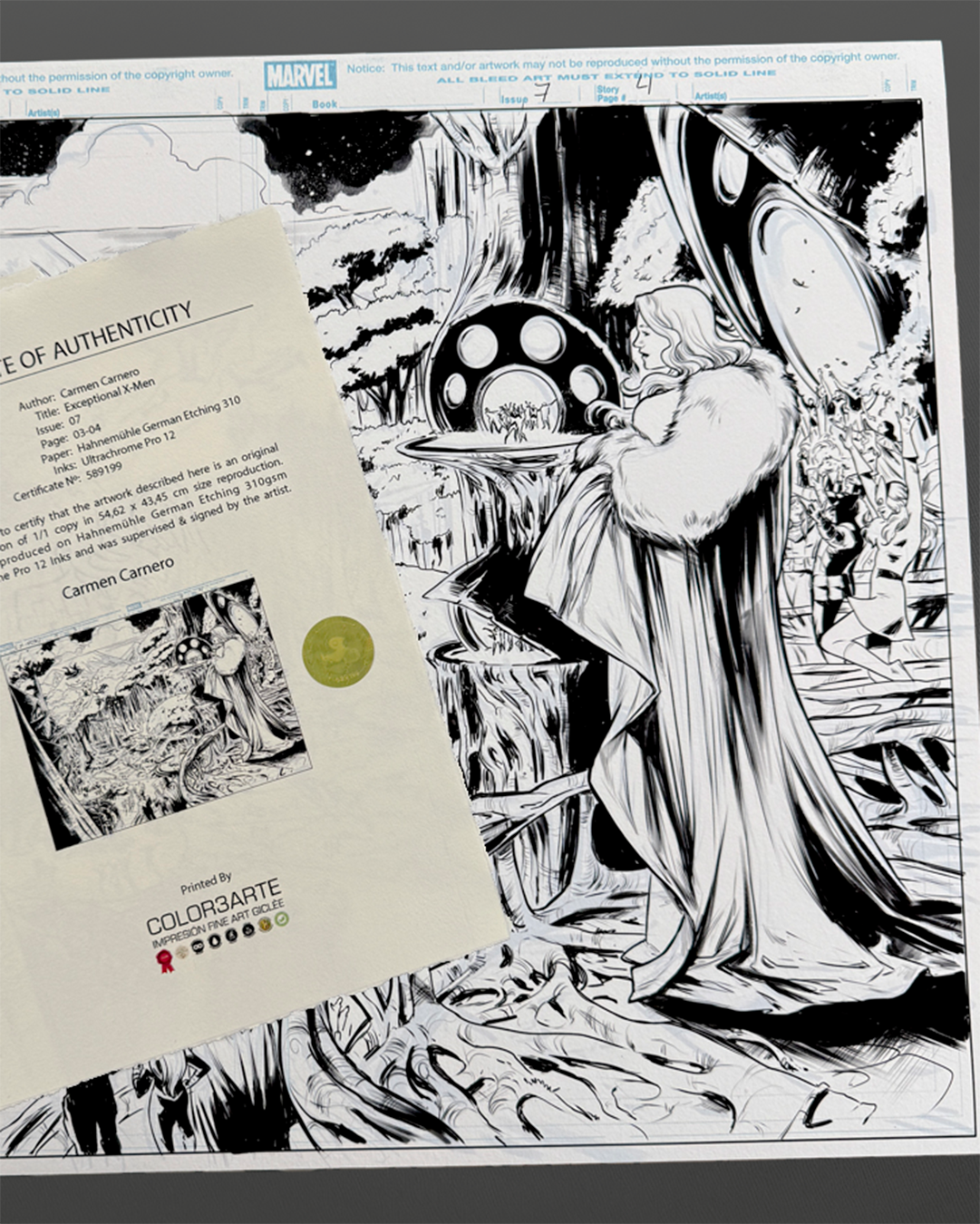
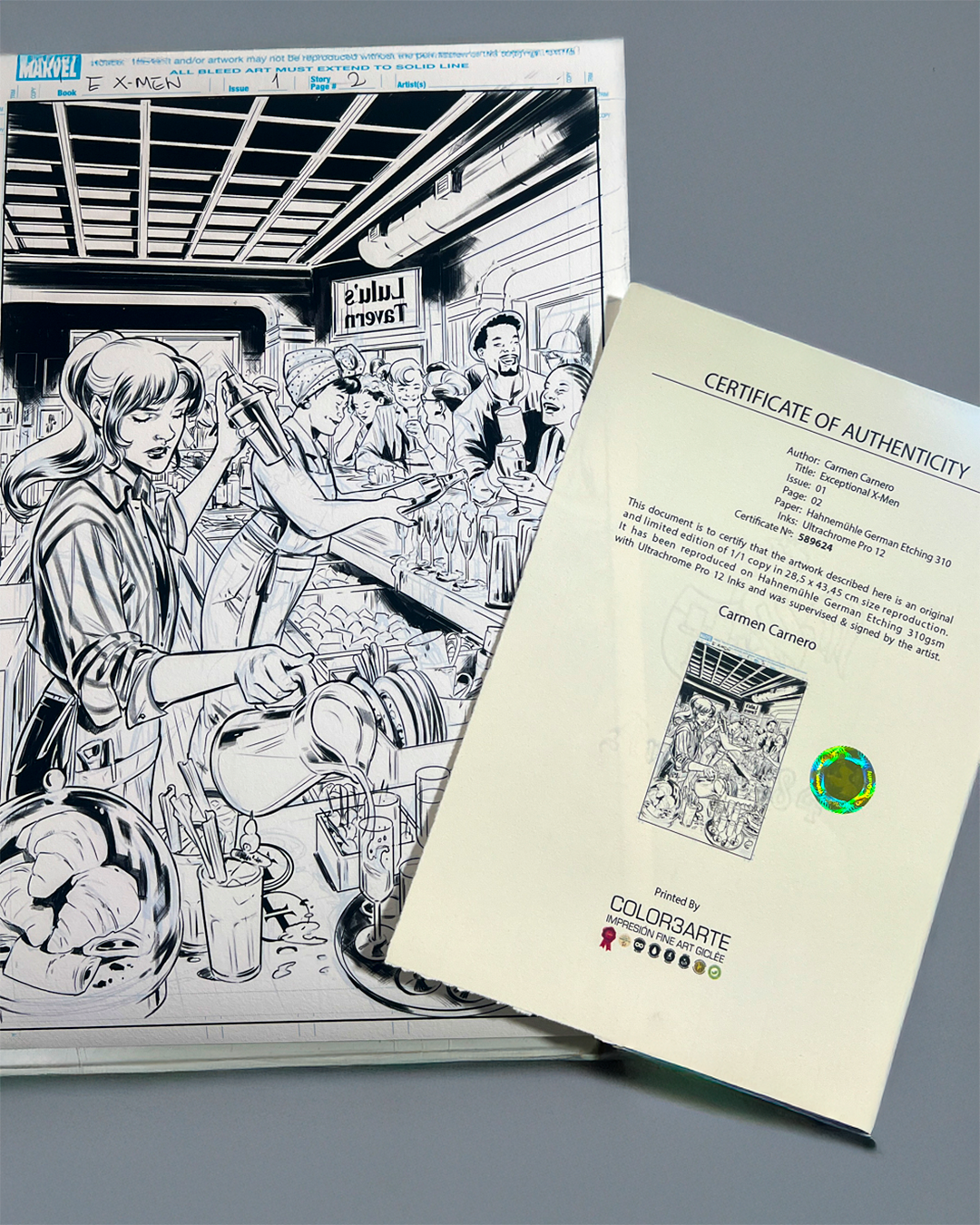
This 1/1 standard is particularly valuable when artworks circulate within demanding international collectors’ markets. In that context, Color3arte® collaborates with various galleries, among which The Green Room – Comic Art stands out—an online gallery and agency specializing in original comic art and the representation of international artists.

The Greenroom (officially The Green Room – Comic Art) is an innovative online art gallery and comic artist representation agency founded in 2023 in San Sebastián (Spain). The project is led by Icíar Palacios Escobar, a cultural journalist and art manager with extensive experience, who acts as founder and director of the gallery. Under her leadership, The Greenroom brings together a distinguished roster of artists whose careers are primarily developed in the international comic market, especially in the United States. Its artists are among the most recognized and promising voices in the field, contributing each month to major titles published by DC Comics, Marvel Comics, BOOM! Studios, Image Comics, and Dark Horse Comics, among others.


Artists represented by The Green Room include:

Pepe Larraz – Javi Fernández – Álvaro Martínez Bueno – Belén Ortega – Aneke – David Lafuente – David López – Ángel Unzueta – Carmen Carnero – Fernando Blanco – Fernando Pasarín – Fran Galán – Gabriel H. Walta – Javier Rodríguez – Paolo Villanelli – Toni Fejzula – Valerio Schiti – Alex Nieto

Hahnemühle Papers
Hahnemühle Gold Certified Studio
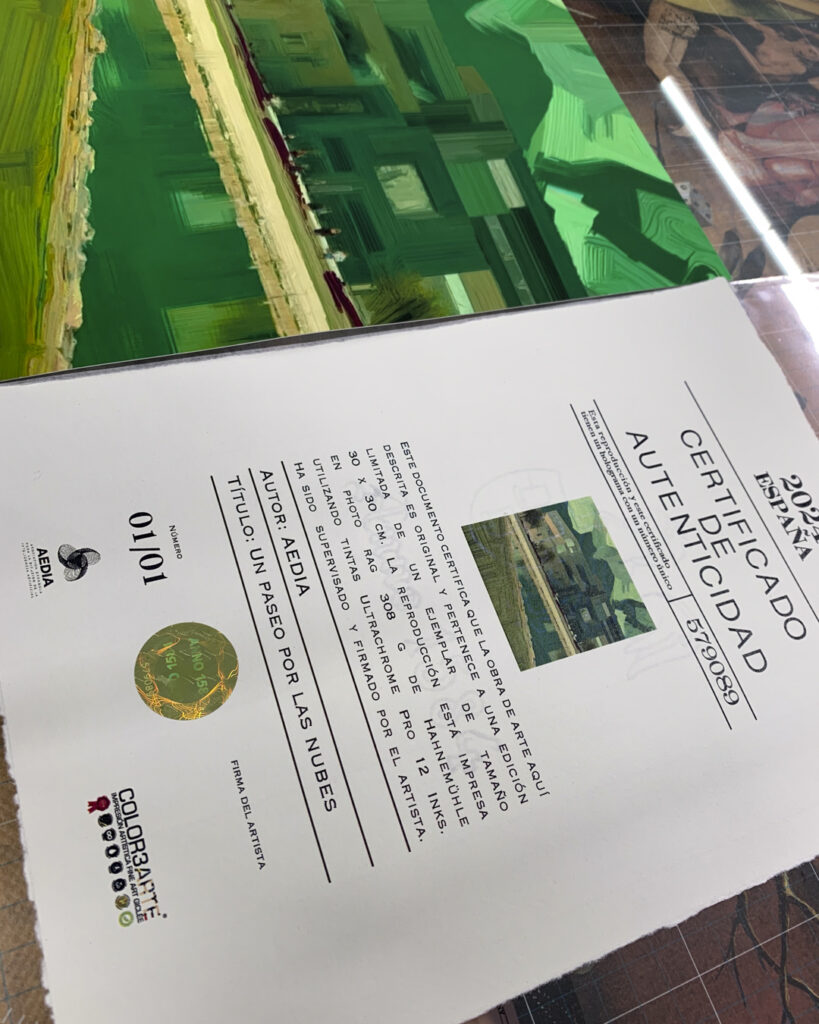
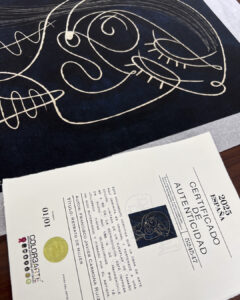
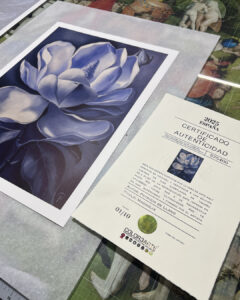
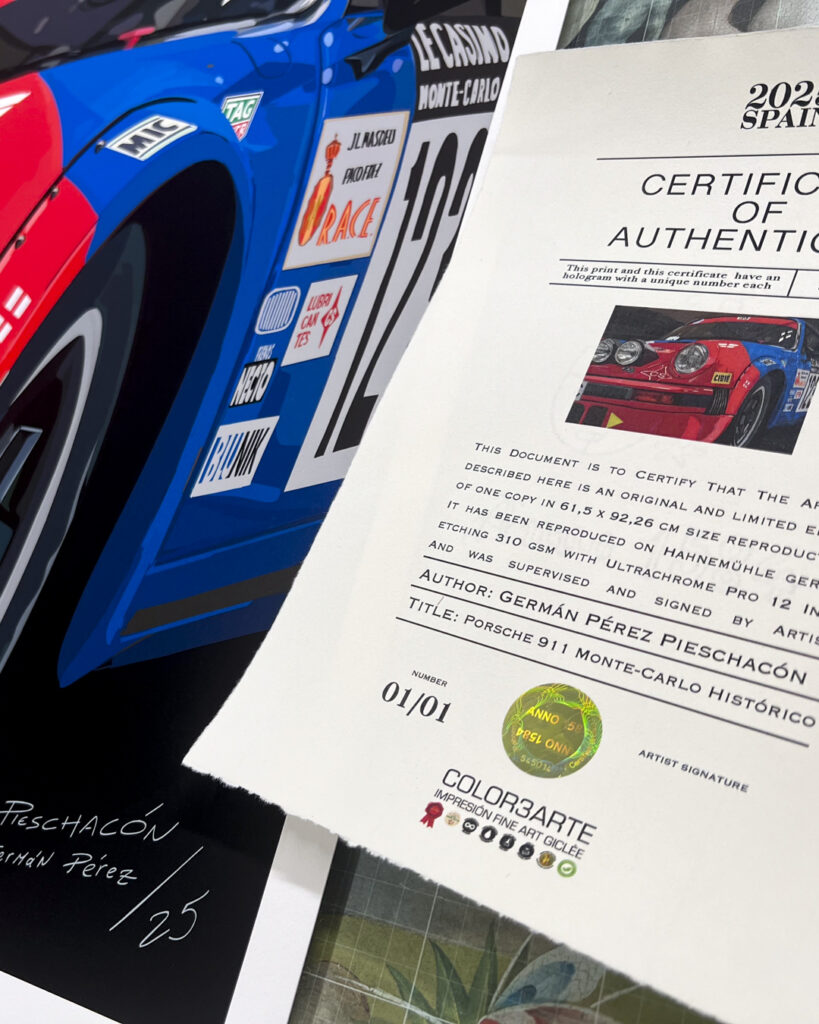
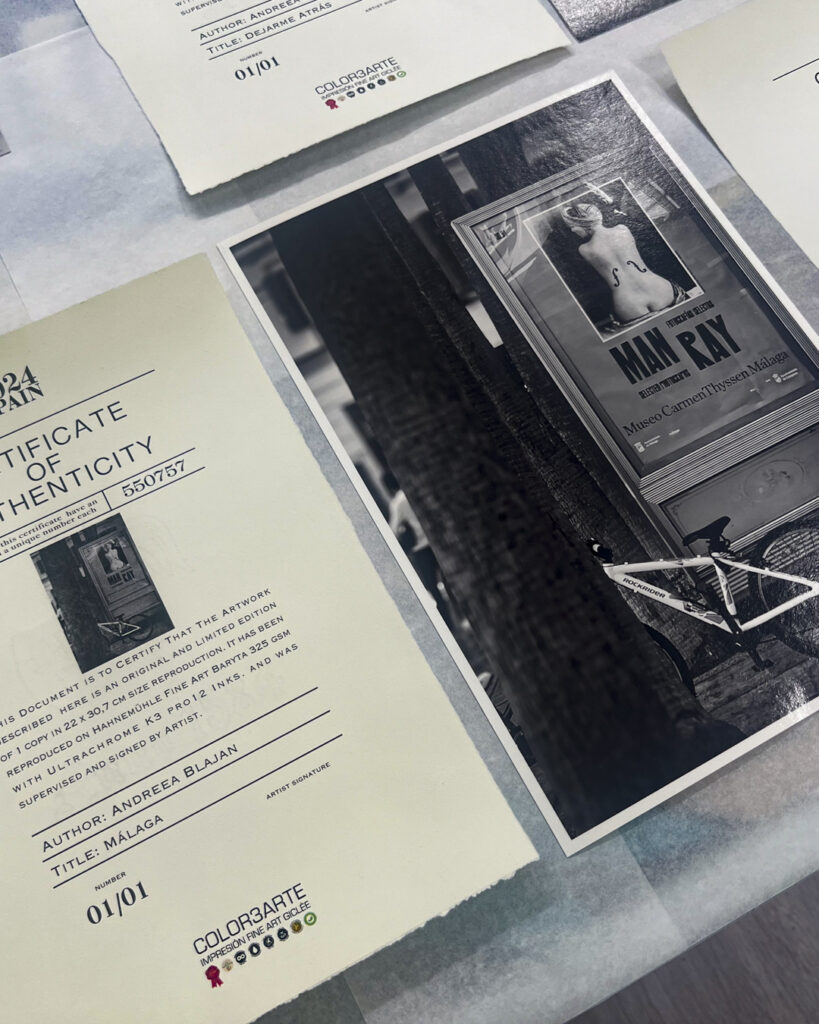
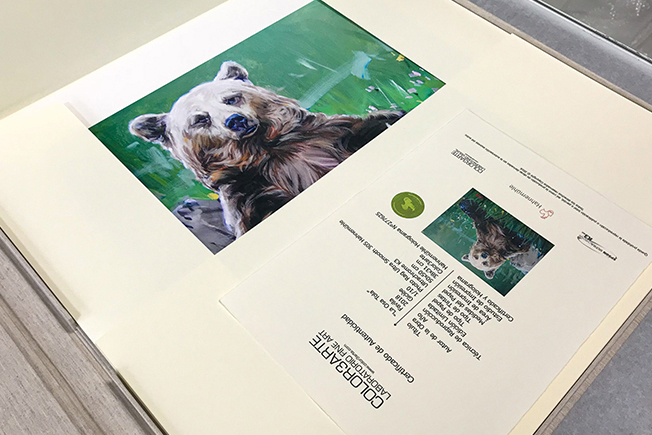
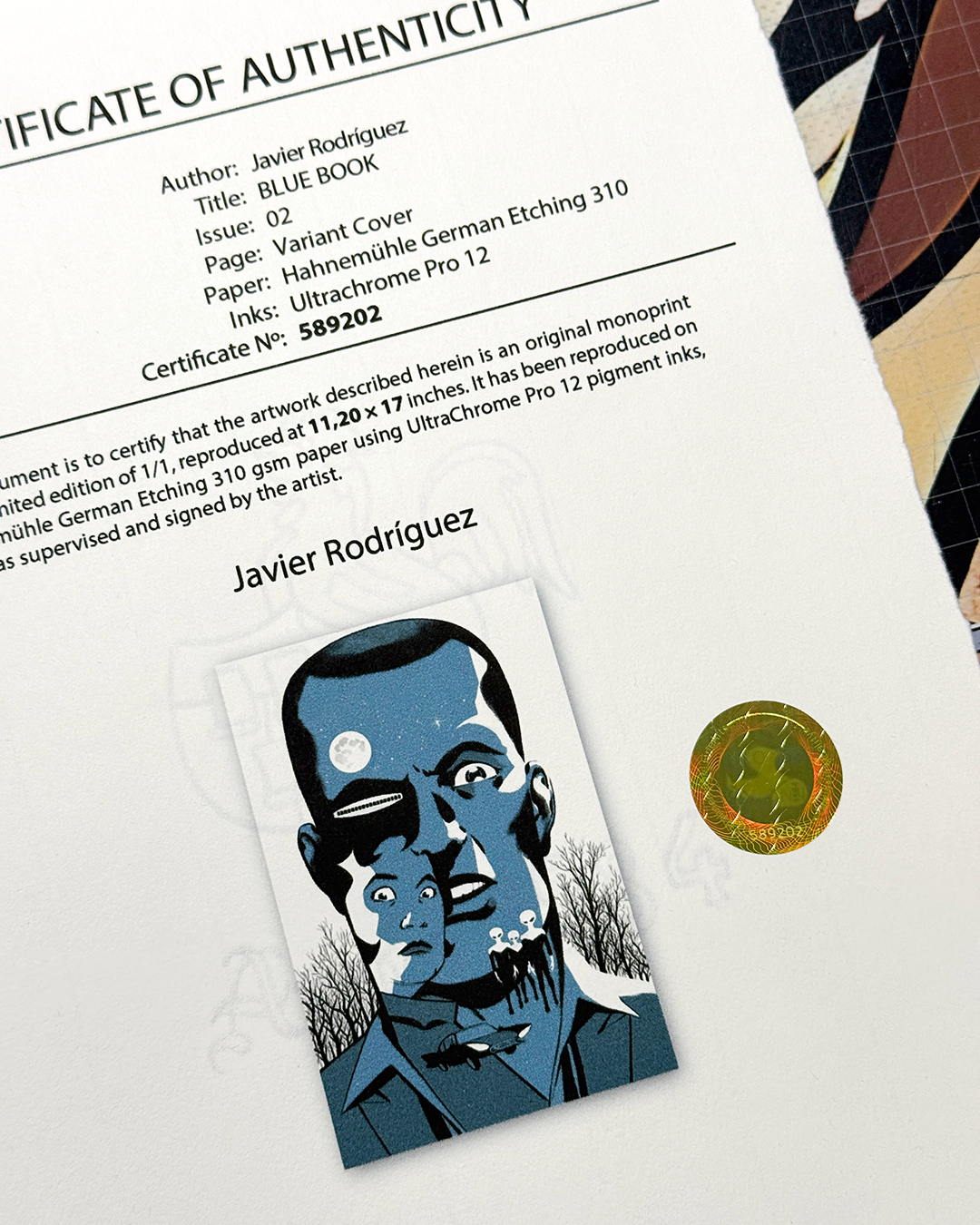
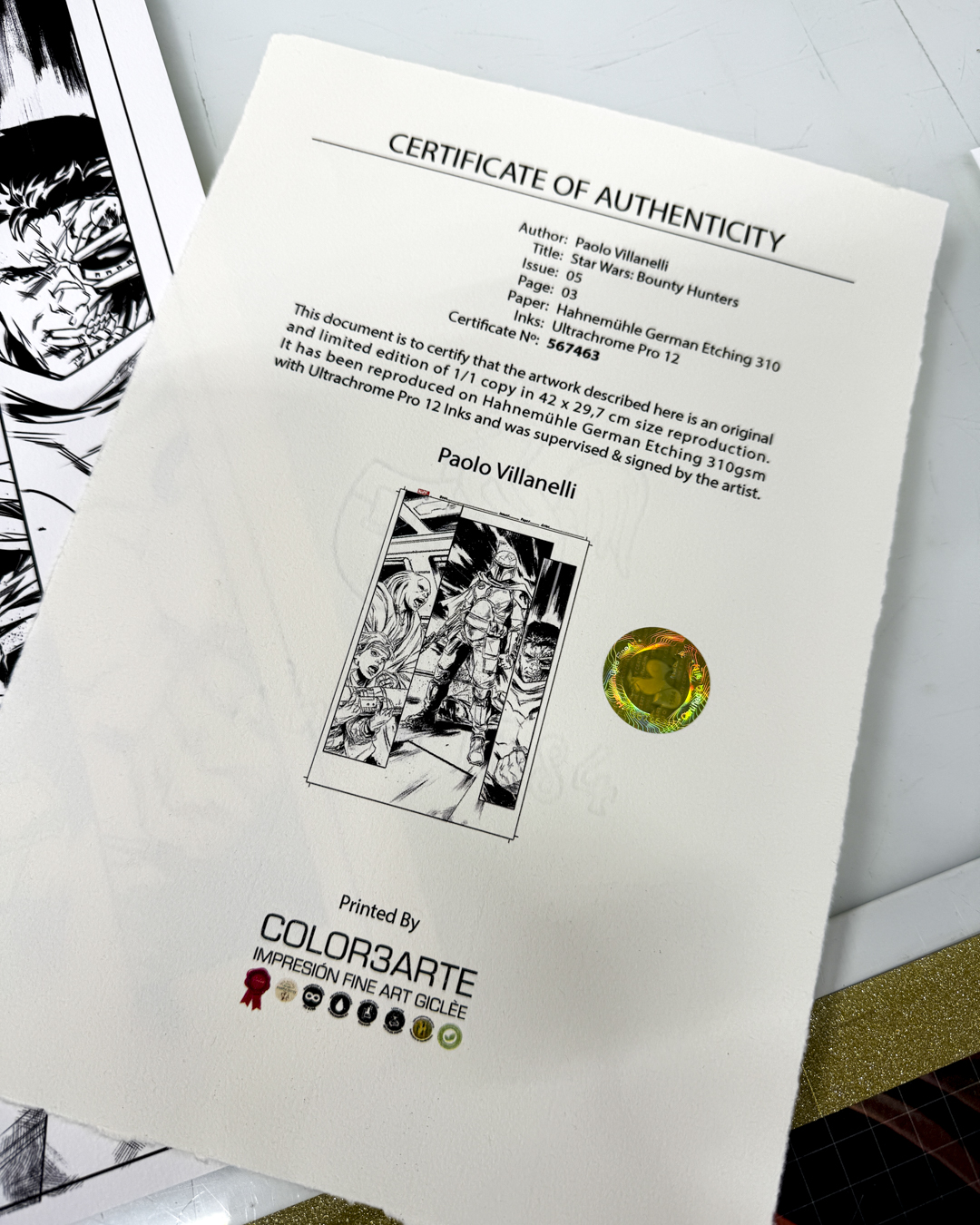
Hahnemühle Numbered Holographic Certificate
Digital Authentication Chip

Monoprint Certification: Hahnemühle Hologram and/or Digital Authentication Chip (NFC)

When an artwork is unique (1/1), certification is not an “extra”—it is part of the work’s value and of the collector’s confidence. You may choose one system, the other, or both, depending on the level of protection and traceability required.


Hahnemühle Hologram Certificate (Serialized Hologram)

A serialized hologram establishes a direct physical relationship between the artwork and its documentation. It acts as a highly effective safeguard against substitution, duplication, or confusion of pieces.

If the artist wishes, the work can also be registered with My Art Registry (myartregistry.com), reinforcing provenance and recording the specific hologram number associated with the artwork.


Digital Authentication Chip (CAD – NFC)

The artwork may also incorporate an NFC chip (a discreet embedded tag) that, when scanned with a smartphone, links to a verification record containing the key data of the monoprint.

This enables:

Immediate verification — confirm within seconds that the piece corresponds to its official record.

Traceability — maintain centralized and consistent documentation.

Future-proof protection — facilitate provenance tracking, insurance processes, resale, or exhibition loans.

The Monoprint as a Production Framework

A monoprint does not belong to a single discipline; it is a production framework and an edition commitment. It consists of materializing an image as a unique object (under clearly defined conditions: size, substrate, process) and supporting it with verification and traceability.

For that reason, it is particularly effective in the following contexts:


Fine Art Photography: The “Original” as a Commitment to Uniqueness

In photography, a 1/1 monoprint means declaring that the image will exist only once in the physical world, in a specific size and on a defined substrate.

Verifiable exclusivity — 1/1 in that size and on that paper, with formal certification.

Material reading — the paper (and its finish) defines character and transforms the image into an object.

Technical file coherence — control of gradients, blacks, and color ensures a consistent and defensible result.


Digital Art Brought into the Physical Realm: When the File Becomes the Artwork

Digital illustration, digital painting, 3D rendering, collage, hybrid imagery, or generative works: the monoprint allows the final version to be closed as a unique object, produced under Fine Art standards and protected by a certification system that safeguards both artist and collector.

Materialization without ambiguity — a single final piece, not a series.

Functional traceability — clear metadata and documentation linked to the artwork.

Market and collection value — facilitates provenance, insurance, resale, and exhibition loans.


Comic Art and Illustration: Why the Format Works Exceptionally Well

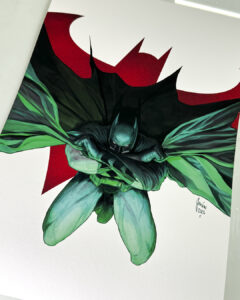
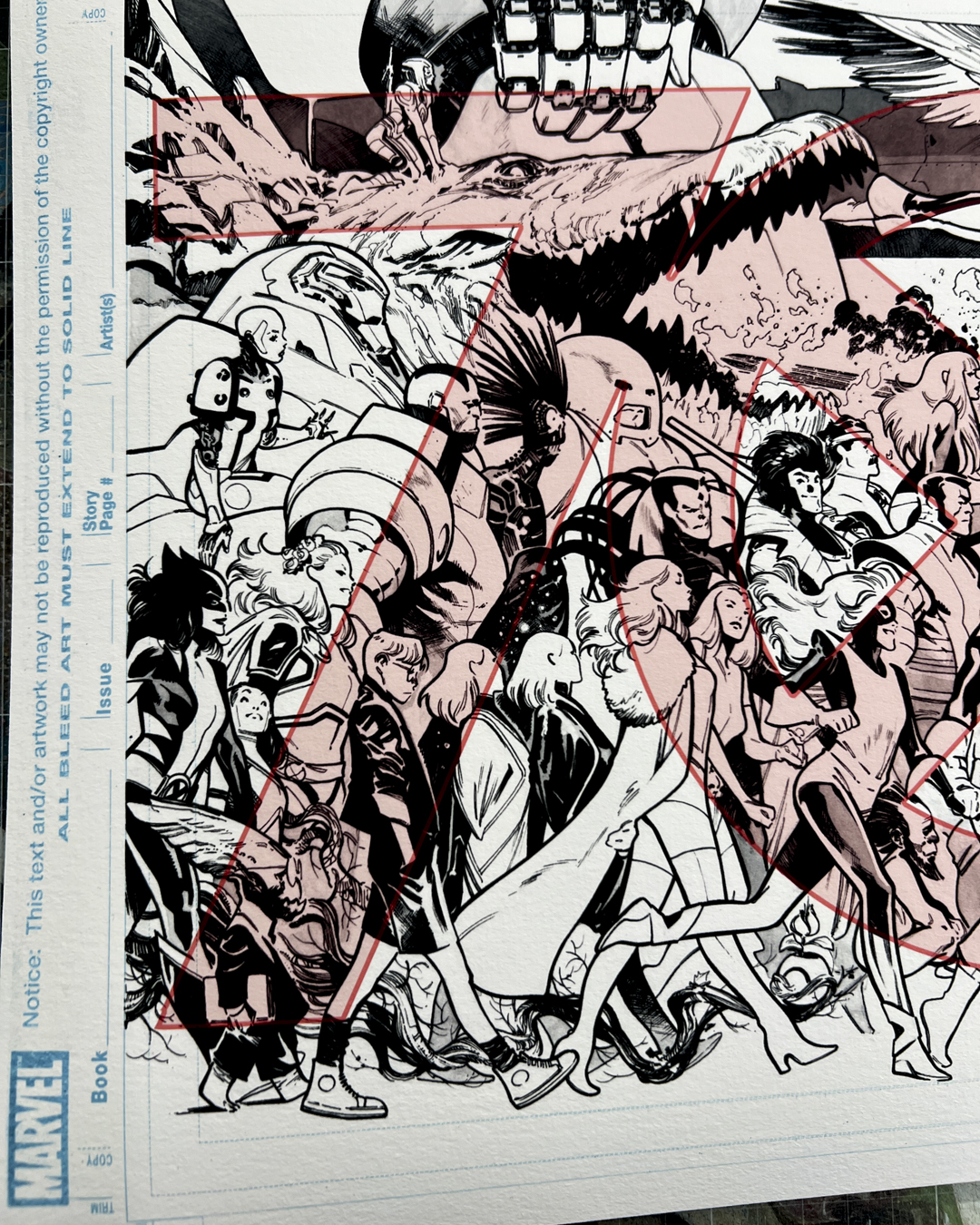
In comic art, black is not mere fill; it is atmosphere, rhythm, and narrative structure. A Fine Art monoprint enables a 1/1 piece with genuine object presence, particularly compelling for:

  • Alternative covers conceived as a unique 1/1 artwork.

  • Character illustrations for collectors.

  • Reinterpreted iconic pages or key narrative moments.

  • Chromatic variants (colorways) produced as a single unique piece.

  • Works incorporating subsequent manual intervention.

Frequently Asked Questions About Monoprints (FAQ)

Frequently Asked Questions About Monoprints (FAQ)

Is a monoprint a limited edition?

No. A monoprint is 1/1: a single, final artwork.
A limited edition implies multiple copies produced within a defined total number.


What is the best paper for a monoprint?

It depends on the intended character of the piece:

  • Matte cotton papers for a more tactile, object-oriented reading.

  • Baryta papers for greater contrast and enhanced black depth.

  • Natural Line papers when reinforcing a sustainability-driven approach.

The essential decision is to select the paper in direct relation to the image and its visual intent.


What does the Digital Authentication Chip (CAD) provide?

It provides immediate verification and traceability: an artwork record accessible via smartphone scan, reinforcing provenance, security, and long-term documentation.


How to Commission a 1/1 Monoprint

To initiate a monoprint, it is most efficient to define three elements from the outset:

  1. The objective (collection, gallery, portfolio, special release).

  2. The substrate (paper type and finish).

  3. The certification scheme (hologram, NFC, or both).

From there, the file is reviewed, the paper is confirmed, and production is finalized with controlled verification.

If the monoprint is intended for collection or gallery circulation, a conservation plan should be integrated from the beginning.


Contact / Quotation

If you wish to produce a fully certified 1/1 monoprint, the Color3arte® team can advise you on paper selection, file preparation, and final finish.

Color3arte® — Oviedo (Asturias, Spain)
Email: color3arte
Tel.: +34 985 987 984
Mobile: +34 627 795 604
Address: Calle Manuel Fernández Avello, 15, Bajo comercial Local A, 33011 Oviedo, Asturias, Spain

Monoprints: 1/1. This is not a limited edition; it is an original, one-of-a-kind, certified work.

Monoprints 1/1 — original, one-of-a-kind, and certified artwork

Monoprints are one-of-a-kind prints: a single combination of gesture, ink, and support gives rise to the image. Inspired by the explorations of Edgar Degas, Mary Cassatt and Paul Gauguin, these pieces bring the ambition to create truly unique graphic works into the present—and into the digital realm.

What is a monoprint?


A monoprint is the synthesis of a graphic work and a unique piece: starting from a single file—digital art, a photograph, or a digitization of a classic work—a single pigment-based Fine Art print (1/1) is produced, signed, certified, and backed by the artist’s written commitment never to produce another print with identical visual characteristics. Thus, the file becomes an art object, and that copy is established as an absolute and irreplaceable original.

At Color3arte we produce 1/1 monoprints to Fine Art standards for collectors: we manage archiving and color, select papers with maximum permanence, and perform a final verification with robust certification.

What is the value of a monoprint?

  • A one-of-a-kind original —only one copy exists, reserved for a collector.

  • The artist's intention —it is not a "copy": it was conceived from the outset as a unique piece.

  • Technical excellence —filing, color management, media, and proofing are handled with fine art precision.

  • Warranty and traceability — a physical certificate and NFC registration safeguard the artwork and its ownership.

How a Fine Art Monoprint Is Produced at Color3arte

A serious monoprint isn't just a matter of "print and done." For a 1/1 edition to be coherent, consistent, and defensible, the workflow is based on four key steps.

1) File preparation

We examine what truly affects the final result: effective resolution, smooth gradients, color space consistency, and control of shadows and highlights to prevent color clumping or tonal breaks.

2) Color management and soft proofing

Here, we are looking for something very specific: to predict how the image will look on the chosen paper. Soft proofing allows us to make informed adjustments and maintain color accuracy while preserving the unique characteristics of the paper.

3) Choosing paper 

Paper is not a “neutral medium.” It defines texture, microcontrast, apparent saturation, and, above all, the rendering of black. For monoprints, we use Hahnemühle vegan Fine Art papers, a particularly appealing option for those who also prioritize environmental sustainability.

4) Printing and final verification

The print is evaluated under proper lighting, and the key factors are assessed: uniformity, shadow detail, neutrality, and color consistency. The goal is a “gallery-quality” result: stable, clean, and defensible.

Hahnemühle Vegan Fine Art Paper: Quality, Durability, and Consistency

Hahnemühle that its papers are vegan and that this decision has been part of its manufacturing approach for decades: the sizing process does not use animal gelatin, but rather synthetic compounds.

In practice, for a monoprint, this means:

  • Surface quality and texture: a genuine, unfinished look.
  • Understanding color: texture and finish influence how the pigment “breathes.”
  • Deep blacks and fine detail: invaluable in photography, painting, illustration, and comics.
  • Archival approach: media selected for their stability and resistance to aging.

Water-based pigment inks: color, definition, and stability

For printing fine art monoprints using the giclée process, water-based pigment inks are the professional standard.

Why? Because they offer clean color , fine detail, and excellent stability when paired with the right fine art papers. The result is usually an image with greater impact: deep blacks, smooth transitions, and a more “artistic” look.

Epson, for example, describes UltraChrome PRO12 as a water-based pigment ink, a type of ink highly valued in fine art printing for its precision and archival quality.

Visible quality: color, deep blacks, and Dmax

In a monoprint, viewers usually notice two things above all else: the richness of the color and the depth of the black.

  • Color: It’s not just about saturation; we’re talking about clarity, consistency, and smooth transitions.
  • Black and Dmax: A good Dmax produces rich blacks without losing detail in the shadows. This enhances depth, readability, and drama.

Durability and preservation: a one-of-a-kind piece is built to last

A monoprint is conceived as a work of art, and its longevity depends on the whole. A few simple guidelines can make a big difference:

  • Avoid direct sunlight or harsh lighting on the construction site.
  • Maintain basic humidity and temperature control.
  • Handle with gloves or by the clean edges.
  • Framing with archival materials.

 Monoprints

EThis 1/1 standard is particularly useful when the artwork circulates in demanding international collector markets. In this context, Color3arte® collaborates with various galleries, notably Green Room – Comic Art, an online gallery and agency  specializing in original comic art and the representation of international artists.

The Greenroom (officially The Green Room – Comic Art) is an innovative online art gallery and agency representing comic book artists, founded in 2023 in San Sebastián (Spain). The project is led by Icíar Palacios Escobar, a cultural journalist and art manager with extensive experience, who serves as the gallery’s founder and director. Under her leadership, The Greenroom brings together a distinguished team of creators whose careers have developed primarily in the international comic book market, particularly in the U.S.; in fact, its artists are among the most recognized and promising in the field, producing some of the biggest hits each month for publishers such as DC Comics, Marvel, BOOM! Studios, Image Comics, and Dark Horse, among others.

Artists represented by The Green Room include: 

Pepe LarrazJavi FernándezÁlvaro Martínez BuenoBelén OrtegaAnekeDavid LafuenteDavid LópezÁngel UnzuetaCarmen CarneroFernando BlancoFernando PasarínFran GalánGabriel H. WaltaJavier RodríguezPaolo VillanelliToni FejzulaValerio SchitiAlex Nieto

Hahnemühle Papers
Hahnemühle Gold Certified Studio
Hahnemühle Numbered Holographic Certificate
Digital Authentication Chip

Monoprint certification: Hahnemühle hologram Hahnemühle Digital Authentication Chip (NFC)

When a work is one-of-a-kind (1/1), certification isn’t just an “extra”—it’s part of the piece’s value and the collector’s peace of mind. You can choose one, the other, or both systems, depending on the level of protection and traceability you’re looking for.

Hahnemühle holographic certificate Hahnemühle numbered hologram)


A serialized hologram creates a direct physical link between the artwork and its documentation. It serves as a highly effective safeguard against the substitution, duplication, or misidentification of pieces. Additionally, if the artist chooses, they can register the artwork on My Art Registry (myartregistry.com) to verify its provenance and record the hologram number associated with the artwork.

CAD Digital Authentication Chip


The artwork can also incorporate an NFC chip (a discreet tag) that, when scanned with a smartphone, links to a verification page containing key details about the monoprint. This allows for:

  • Instant verification: check in seconds to make sure it's the right part.

  • Traceability: keeping information centralized and consistent.

  • Future protection: facilitating provenance verification, insurance, resale, or exhibition loans.

Monoprint does not belong to a single discipline: it is a framework for production and a commitment to edition. It involves creating an image as a unique piece (under defined conditions: size, medium, process) and backing it with verification and traceability.

That's why it works especially well in:

Fine Art Photography: The “Original” as a Commitment to a One-of-a-Kind Piece

In photography, a 1/1 monoprint means that the image will exist only once in the physical world, in a specific size and on a specific medium.

  • Verifiable exclusivity: 1/1 in that size and on that medium, with certification.

  • Material interpretation: Paper (and its finish) defines character and transforms the image into an object.

  • Technical consistency of the file: control of gradients, blacks, and color to ensure a consistent and defensible result.

Digital art brought into the physical world: when the digital file becomes a work of art

Digital illustration, digital painting, 3D, collage, hybrid or generated images: monoprinting allows for the creation of a final version as a one-of-a-kind object, using a fine art process and a certification system that protects both the artist and the collector.

  • Unambiguous realization: a single final piece, not a series.

  • Useful traceability: clear metadata and documentation associated with the work.

  • Market and Collection: facilitates provenance, insurance, resale, and loans.

Comics and Illustration: Why They Work So Well

In comics, black isn't just filler—it creates atmosphere, rhythm, and visual interest. Fine Art monoprints result in a one-of-a-kind piece with a tangible presence, making them particularly appealing for:

  • Alternative covers as a unique 1/1 edition.

  • Collectible character illustrations.

  • Iconic scenes reimagined or key narrative “moments.”

  • Colorways as one-of-a-kind pieces.

  • Items requiring subsequent manual processing.

Frequently Asked Questions About Monoprints (FAQ)

Frequently Asked Questions About Monoprints (FAQ)

Is a monoprint a limited edition?

No. A monoprint is 1/1: a one-of-a-kind final work. A limited edition involves multiple copies within a defined total number.

What is the best paper for a monoprint?

It depends on the look you're going for: matte cotton for a more "art-book" feel and a tactile experience; baryta for greater contrast and deeper blacks; Natural Line when you want to emphasize sustainability. The key is to choose the paper based on the image.

What does the Digital Authentication Chip (CAD) offer?

It provides immediate verification and traceability: a project record accessible via scan that ensures authenticity, security, and long-term documentation.

How to Order a 1/1 Monoprint

To begin a monoprint, the most efficient approach is to establish three things from the outset: the objective, the substrate, and the certification process. From there, the file is reviewed, the paper is selected, and the production process is finalized with a final check.

If the monoprint is intended for a collection or gallery, it is advisable to include a conservation plan from the outset.

Contact / Quote

If you’d like to create a fully certified 1/1 monoprint, the Color3arte® team can advise you on paper, printing, and the final finish.

Color3arte® — Oviedo (Asturias)
Email:color3arte
Tel.: +34 985 987 984 / Mobile: +34 627 795 604
Address: Calle Manuel Fernández Avello, 15, Ground Floor, Unit A, 33011 Oviedo, Asturias

Giclée prints on fine art paper and canvas

A personalized approach is the most important factor when printing an artist's work

At Color3arte , we're Color3arte here to help you.

Hahnemühle Fine Art Papers: Everything You Wanted to Know.

Hahnemühle Fine Art Papers: Everything You Wanted to Know.

Hahnemühle Papers

Advanced artificial intelligence based on ChatGPT technology, specifically designed to provide advice on giclée printing giclée Hahnemühle Fine Art papers.

Color3arte the implementation of an AI specialized in Fine Art papers from Hahnemühle
In exciting news for the art and photography world, Color3arte® has revealed that it is in the process of training an advanced artificial intelligence system based on ChatGPT technology, specifically designed to provide guidance on giclée printing giclée Hahnemühle Fine Art papers. This innovative project aims to help artists and photographers select the most suitable paper for their works, taking into account essential factors such as texture, gloss, and other characteristics that are crucial for optimizing the quality and artistic expression of the prints.
The development of this AI is in its early stages, and it is expected to require a brief period of adjustments and fine-tuning. However, Color3arte® is confident that the model will be an extremely useful tool for the artistic community. “We understand that choosing the right paper is a critical decision that can completely transform the appearance of a work of art or photograph.” “With this new AI, we want to make it easier for our customers to do exactly that, ensuring that every print faithfully reflects their original vision.”
This specialized GPT model will not only offer personalized recommendations on the most suitable paper type for each project, but will also provide detailed information on how the different characteristics of Hahnemühle papers Hahnemühle influence the final print results.
Exclusive Access for Paid Chat GPT Subscribers
During this initial phase, access to specialized AI will be available exclusively to paid subscribers of Color3arte®'s ChatGPT. This will allow the platform's most engaged users to gain an additional benefit and make the most of this advanced tool.
The launch of this AI tool promises to be a valuable resource for artists and photographers looking to refine their printing techniques and elevate the quality of their work to the highest level. Powered by ChatGPT’s artificial intelligence technology, Color3arte® is marking a significant milestone at the intersection of technology and art.
Color3arte® is a recognized leader in the high-quality printing industry and has been at the forefront of innovation in the field of digital and photographic art. With an unwavering commitment to quality and customer satisfaction, Color3arte® continues to explore new technologies to improve its services and products.

Giclée prints on fine art paper and canvas

A personalized approach is the most important factor when printing an artist's work

At Color3arte , we're Color3arte here to help you.

The art of printing art.

The art of printing art.

The Art of Printing Art
The Museum of Modern Art, better known as MoMA, image by Andy Warhol. Public domain image.

The Art of Printing Art

Did Alois Senefelder ever consider what he was offering the world when he created, in the late 18th century, an inexpensive way to print sheet music and plays? Probably not, although years later he realized that his invention of lithography ended up being far more lucrative and interesting than the purpose for which it was originally conceived—a purpose for which it had little use.

One morning in July 1796, the German playwright wrote with a greasy pencil on a polished stone the list of clothes the laundress would take; as he did so, he recalled that for several months he had been trying to devise a method that would allow for the reproduction of a play he had written, which no publishing house would take on.  That almost imperceptible domestic moment led him to experiment with reproduction methods based on the premise of the incompatibility between fat and water, and the technique of etching. Thus lithography was born, and soon artists discovered the advantages of the new process, which allowed them to draw directly onto the stone without the need for intermediate engravers.

Alois Senefelder – The Art of Lithography, Cleveland Museum of Art. Public domain images.
The Art of Printing Art

In the 19th century, artists such as Goya, Daumier, Delacroix, Edvard Munch, Matisse, Braque, Picasso, Toulouse-Lautrec, Alphonse Mucha, and Andy Warhol elevated lithography to the highest level of artistic expression and quality.

The Art of Reproducing Art
Francisco José de Goya y Lucientes Public domain image
The Art of Printing Art
Delacroix, Edvard Munch, Toulouse-Lautrec, Alphonse Mucha—public domain images

However, it was not until the mid-20th century that the art world began to seriously engage with the art of printing art. Paris and Berlin began to introduce a concept as new as it was modernizing, initially known as the “new print”; or, in other words, the art of printing new forms, in what the world now knows as engravings, and they forever changed the face of print art.

Those were times when drawing reigned supreme; consequently, the field was dominated by line engravings—whether created using a burin, etching, or woodcut—a technique widely employed by the German Expressionists of the Die Brücke group, who were experts in depicting the human figure.

It was the logical response of what were then known as the “early avant-garde” movements, which made it clear that artists were inclined to improve and continue evolving in their vision of images through a quest that included tools, equipment, and technological mastery to provide the best foundation and support for the projects with which they hoped to fulfill their aspirations. The result was an improvement in technique and, with it, the discovery of new materials to perfect a product that, for the benefit of humanity, constitutes an invaluable legacy treasured in the world’s great museums thanks to the fact that it has been able to be printed and preserved through the use of various techniques. These are not original works, of course; yet some are of almost incalculable value.

The Vollard Suite, two special exhibitions: "Picasso in Canada" and "Picasso: Man & Beast. The Vollard Suite of Prints." Winnipeg Art Gallery, Manitoba (2017) Image in the public domain.

Such is the case with the Vollard Suite, a collection of 100 engravings by Picasso considered among the most important works of modern art; approximately 300 sets were produced, and perhaps fewer than 20 survive in their entirety. Worldwide, only 10 museums possess the entire collection; the last to acquire it, the British Museum, paid nearly one million pounds sterling for the set of works in 2011.

Printing art: a process with many names

The artistic process of creating and developing designs—using a medium and subsequently transferring them to a substrate—has undergone various changes that have made it increasingly precise and demanding, diversifying it to meet specific needs.


Screen printing

It is possibly the oldest printing technique, although it is not necessarily used to reproduce an existing work. Screen printing is usually used to create a specific final image that is reproduced almost identically multiple times. It has been known since 960 AD and is believed to have been invented by the Chinese Song Dynasty. The technique is still in use today and serves as a medium of expression in the graphic arts.

Wang Juzheng (Song), The Spinning Wheel Public domain image .

Lithography

It is considered a distinct artistic printing technique and is used to reproduce a drawing in print form, using a stone or a metal plate to transfer the artist’s work directly onto paper.  Oil-based inks are applied to plates that are pressed onto paper; each plate yields a limited number of copies. If the print quality is outstanding and only a small number of editions have been produced, it holds significant value.

Stone used for lithographic printing featuring a Princeton University motif. Collection: Princeton University Library. Princeton University; Princeton, NJ. Image in the public domain.

Photomechanical Reproduction

It is the process of creating a photographic image that is printed with ink on paper rather than on a photosensitive material. Essentially, and although the term is very broad, any work of art reproduced by photomechanical means is a reproduction. It can be considered a first step in the transition from analog to the digital age.  In the field of photomechanical reproduction, several processes are known, namely prepress, or photomechanics, which led to the use of large printing presses and special cameras that separated colors; offset printing, which utilized a three-cylinder system to improve print quality; and a variety of other techniques such as flexography, gravure, and wood engraving.

 Photomechanical printing Public domain image .

Giclée Fine Art Printing

This is the highest-quality print, created from a digital file using sophisticated inkjet printers that produce prints with immense depth of contrast, vibrant colors, and excellent resolution.

A print created using the Giclée technique Giclée remain unchanged for over 100 years, making it the preferred method of illustrators, fine art photographers, and, in general, art connoisseurs who, as we have seen in our studio at COLOR3ARTE, enjoy not only the magnificent results but also our passion for the art of printing art.

The Art of Forging Art

The Art of Forging Art

The Art of Forging Art / Authenticate Your Artwork:Han van Meegeren’s painting“The Last Supper I” at the 11th Art and Antiques Fair in Rotterdam on August 31, 1984. – In the summer of 1938, Han van Meegeren moved to Nice. In 1939, he painted “The Last Supper I” in the style of Vermeer. Image: GaHetNa Nationaal Archief NL/Wikimedia.

Self-Portrait by Han van Meegeren (Public Domain)

Han van Meegeren, a Dutch painter who died in the mid-20th century, shares a strange and inglorious rivalry with Elmyr de Hory: they are arguably, to this day, the two most famous art forgers in history. Their truly fascinating lives and exploits fill the pages of 20th-century art history and are deeply rooted in their lack of success as original painters: they were extraordinary artists who, having failed to succeed in their own creative endeavors, devoted their time to developing an incredibly difficult skill: painting in the style of another.

In May 1945, Allied forces interrogated the banker and art dealer Alois Miedl about the newly discovered Vermeer. Based on Miedl’s confession, the painting was traced back to Han van Meegeren.GaHetNa (Nationaal Archief NL)Photographer Koos Raucamp

Tricking Museums

They were so skilled at it that they managed to make millions by deceiving museums, collectors, and above all, wealthy snobs who were too snobbish to dare subject their artworks to more thorough examinations that might have revealed the truth. In 1940, Han van Meegeren painted the work “The Supper at Emmaus.” It is an oil-on-canvas painting in the style of Vermeer, believed to be the most famous and well-executed forgery in history. This painting is, by the way, very interesting; Meegeren passed it off as an authentic Vermeer (a renowned Dutch painter and creator of the famous painting “Girl with a Pearl Earring”) and sold it as such, slipping it into museum collections for several years. But in reality, Vermeer never painted religious scenes (33 works by the Dutch painter are known), and “The Supper at Emmaus” is an oil painting by Caravaggio, the famous 17th-century Italian painter whose work bears no relation to the forgery.

Dinner Dinner at Emmaus by Han van Meegeren 1936–1937, not by Vermeer. Image: Wikimedia Commons

The Art of Forging Art / Have Your Print Certified

“Pastiches”

The story of Elmyr de Hory is very similar. His paintings—known in art circles as “pastiches” because they are works that attempt, with varying degrees of success, to imitate someone else’s style—are so widely held in private collections and even in museums around the world that, upon his death in 1976, it was determined that at least 1,000 forgeries, distributed worldwide by unscrupulous dealers, had found their way into the most famous art collections on earth.

Emir del Hory paintings: Public Domain

Neither of them ever considered themselves forgers, much less were they aware that their true art was that of swindling. Hory, for example, was an expert in fake Picassos that were inexplicably well-placed; for a scholar of the Malaga-born painter’s work to take even a cursory look would have revealed the inaccuracies in the brushstrokes and other details typical of a Hory pastiche, thereby dashing his ambitions.

The Art of Forging Art / Have Your Print Certified

Artist: Han van Meegeren 1935–1943 Images courtesy Color3arte theRijksmuseum, provided to Color3arte

Courts

Both, however, were tried as forgers, and during one of his trials, Meegeren painted—right in front of the authorities—a Vermeer so authentic that it left everyone with the impression that the man was a photocopier; he avoided a life sentence after being identified as a collaborator.
They went down in history; although their endings were far from happy, they managed to avoid prison sentences and gained recognition. The 21st century has seen numerous exhibitions of their legacy—both their forgeries and their scarce original work—at prestigious venues such as the Círculo de Bellas Artes in Madrid. 

The Trial of Han van Meegeren: Images and Video ( Creative Commons)

The Art of Forging Art / Have Your Print Certified

The Importance of Certifying a Construction Project

It is certainly an anecdote, but it perfectly illustrates the importance of certifying a work of art in the art world. This is a process that should not be entrusted to individuals without sufficient training, and it is becoming increasingly demanding, as certification legally guarantees that a work belongs to a specific artist based on the analysis of certain rigorous criteria. Authentication adds value to the work in the art market, facilitating its sale between private individuals.

However, not all certificates hold the same value in a commercial transaction involving the artwork in question. There are some extraordinarily curious cases; for example, it has been proven that, in the official catalog of Georges Braque’s work, there are two pieces that are not his, but were authenticated by him during his lifetime. Therefore, although these works enjoy double certification—since they appear in the official catalog of his work and bear the painter’s authentic signature—they do not even remotely reach the price of a Braque work if they go up for auction.

Tribute to Braque. The painting is on view atthe Es Baluard Museum of Modern and Contemporary Art in Palma

Zurbarán

Something similar happened with the Zurbarán catalog, which initially consisted of more than a thousand works. Following a thorough study conducted in 2010 by the French historian Odile Delenda, nearly 700 works were removed from the catalog, not because of their dubious origins but because it was certain they were not the work of the famous painter of the Spanish Golden Age. That study served to establish Zurbarán’s oeuvre as a collection of approximately 300 works.

 In the art market

To determine the final price of a work of art, factors such as the work’s age, its presence in museums, level of authenticity, style, and artist are taken into account, as well as technical quality consistent with that attributed to the artist in question; immense value is placed on the credibility and academic and professional prestige of the curator responsible for issuing such certification. In fact, there is a very short list of professionals worldwide who are qualified to do so.

Certifying a construction project is essential

To determine whether that specific work belongs to the artist who signed it, and to confirm whether the work is an original, a forgery, or even the work of another painter, photographer, or illustrator who belongs to the same artistic movement and uses a similar signature. 

It's a task we take very seriously at COLOR3ARTE. Not only do we preserve the authenticity of what we reproduce and defend the right of the photographer and/or illustrator to ensure their work is not used for purposes other than those they intend, but we are also aware that the print quality we offer can tempt certain art dealers to act greedily; for this reason, all works that arrive at our workshops do so with the artist’s approval or with the clearest possible indication of origin.
After all, although the law establishes that it is the express intent to deceive on the part of the person creating the fraudulent work that defines a reproduction of a work of art as a forgery, we take great care to respect the work of the photographer or illustrator who visits us. In fact, we are fortunate to be able to certify the work that comes out of Color3arte, as the author is usually involved in the process.

The Art of Forging Art / Have Your Print Certified

Color3arte

All rights reserved

Sign up for our newsletter.

Join our mailing list to receive the latest news, offers, and updates from our team.

All set! We'll be in touch.