
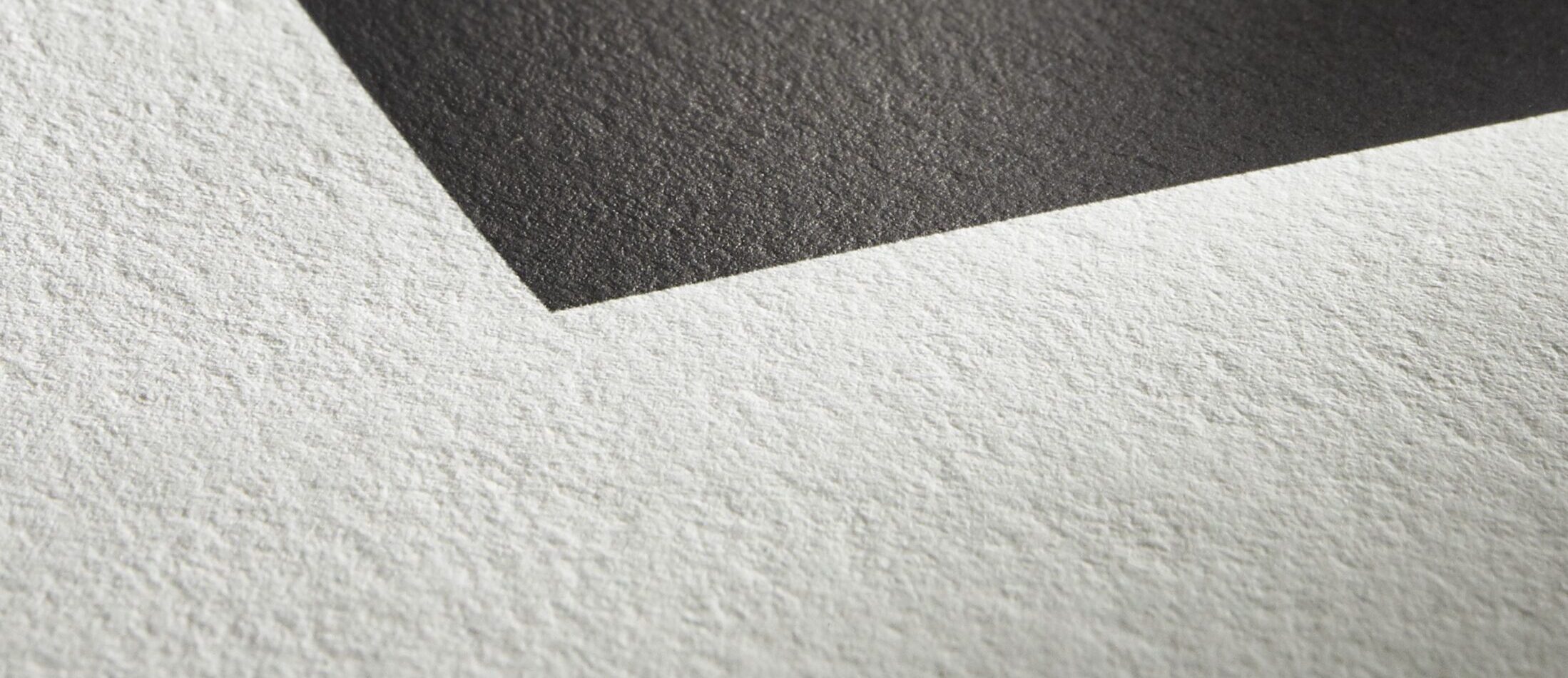
The Face as Territory: Portraits on Hahnemühle Photo Rag® Satin
There is a tension inherent in every photographic portrait: asking the paper to hold a gaze without turning it into glass. Hahnemühle Photo Rag® Satin Hahnemühle precisely on that boundary, where portrait photography ceases to be a reflective surface and begins to behave like skin. A satin-matte finish on 100% cotton, capable of restoring the face’s depth without robbing it of its quietness.
Photo Rag® Satin is neither a true matte nor a high-gloss finish. And that is precisely why it is so well-suited for portraiture.
Icons: From the Flamenco Workshop to a Contemporary Perspective
Portraiture has been grappling with the material for centuries. Rembrandt built up the face with impasto, allowing light to sink into the thick oil paint; Vermeer, on the other hand, sought an almost glass-like surface for *Girl with a Pearl Earring*. Photography inherited that dialectic. Julia Margaret Cameron’s fluid portraits on albumen paper coexisted with the gum bichromate prints that Edward Steichen used to humanize Rodin.
Today, when an artist like Paolo Roversi prints on cotton, or when Irving Penn sought the nobility of traditional media for his *Small Trades*, the choice is never merely decorative. The finish determines how the viewer engages with the face: whether they remain on the outside, looking at a polished object, or allow themselves to penetrate the paper.
Photo Rag® Satin is part of a tradition that shuns flashiness. It offers depth without excessive gloss, and contrast without harshness. It is the portrait paper that doesn’t need to shout to be remembered.
The truth of the matter
Behavior of pigmented inks
Photo Rag® Satin features a unique coating within the Hahnemühle range: the printed area has a subtle satin sheen, while the unprinted area retains a matte finish. In practice, this means that pigmented inks are deposited with very high density, achieving a remarkable D-Max for a cotton paper, without sacrificing the warmth of the substrate.
In portraiture, this translates to precise tonal transitions in the skin—from the light bouncing off the bridge of the nose to the mid-tone of the cheekbone—without the flatness that a pure matte finish sometimes produces. The acutance remains strong: the eyelashes, pores, and nuances of the iris are clearly visible, but without the harsh sharpness typical of glossy baryta paper. Black-and-white gains depth; color portraits regain the skin’s natural warmth—that boundary between pink and olive that is so often lost on overly vivid surfaces.
Basis weight and storage (ISO 9706)
We’re talking about 310 g/m² of pure cotton fiber, produced using the round-mold (mold-made) process, acid-free and lignin-free, in compliance with the ISO 9706 standard for museum-quality paper. That dimensional stability is not merely a decorative feature: it is what ensures that a portrait printed today will remain identical forty years from now, without yellowing, without color shifts, and without structural fatigue in the fiber. It is the unspoken guarantee offered by a high-quality substrate when working with the Fine Art Giclée process.
The finishing option: Photo Rag® Baryta
The choice of paper is always an artistic decision, and Photo Rag® Satin has a counterpart within the same family: Photo Rag® Baryta (315 g/m², 100% cotton, high gloss). While Satin offers a subdued finish—a matte satin—Baryta embraces the luminosity of analog baryta, with the depth characteristic of gelatin-silver photographic paper. Same fiber, same traceability, same warmth of natural white, but a radically different response to light.
When should you choose each one? Satin is ideal for intimate portraits, serene studio shots, and understated editorial work where the skin needs depth without glare. Baryta is best suited for portraits with dramatic high contrast, black-and-white images that demand almost liquid blacks, and images meant to dominate a wall. There is no “right” paper—only a paper that aligns with the photographer’s vision.
The workshop as a meeting place
At Color3arteHahnemühle in Oviedo (Asturias)— each portrait is reviewed with the artist before the substrate is selected. The raking light on the print proof reveals things no screen can show: the texture of the cotton, the way the ink settles in the midtones, the harmony between intention and material.
Every unique piece or limited edition that leaves the studio includes traceability via a Hahnemühle hologram Hahnemühle , upon the artist’s request, a Digital Authentication Chip (CAD) via NFC: a guarantee of origin that protects both the artist and the collector alike. If your project is a portrait and you’re torn between the silence of Satin and the body of Baryta, let’s talk. That conversation, with the paper on the table, is where the printing process truly begins.

