

The Art of Printing Art
The Museum of Modern Art, better known as MoMA, image by Andy Warhol. Public domain image.
The Art of Printing Art
Did Alois Senefelder ever consider what he was offering the world when he created, in the late 18th century, an inexpensive way to print sheet music and plays? Probably not, although years later he realized that his invention of lithography ended up being far more lucrative and interesting than the purpose for which it was originally conceived—a purpose for which it had little use.

One morning in July 1796, the German playwright wrote with a greasy pencil on a polished stone the list of clothes the laundress would take; as he did so, he recalled that for several months he had been trying to devise a method that would allow for the reproduction of a play he had written, which no publishing house would take on. That almost imperceptible domestic moment led him to experiment with reproduction methods based on the premise of the incompatibility between fat and water, and the technique of etching. Thus lithography was born, and soon artists discovered the advantages of the new process, which allowed them to draw directly onto the stone without the need for intermediate engravers.


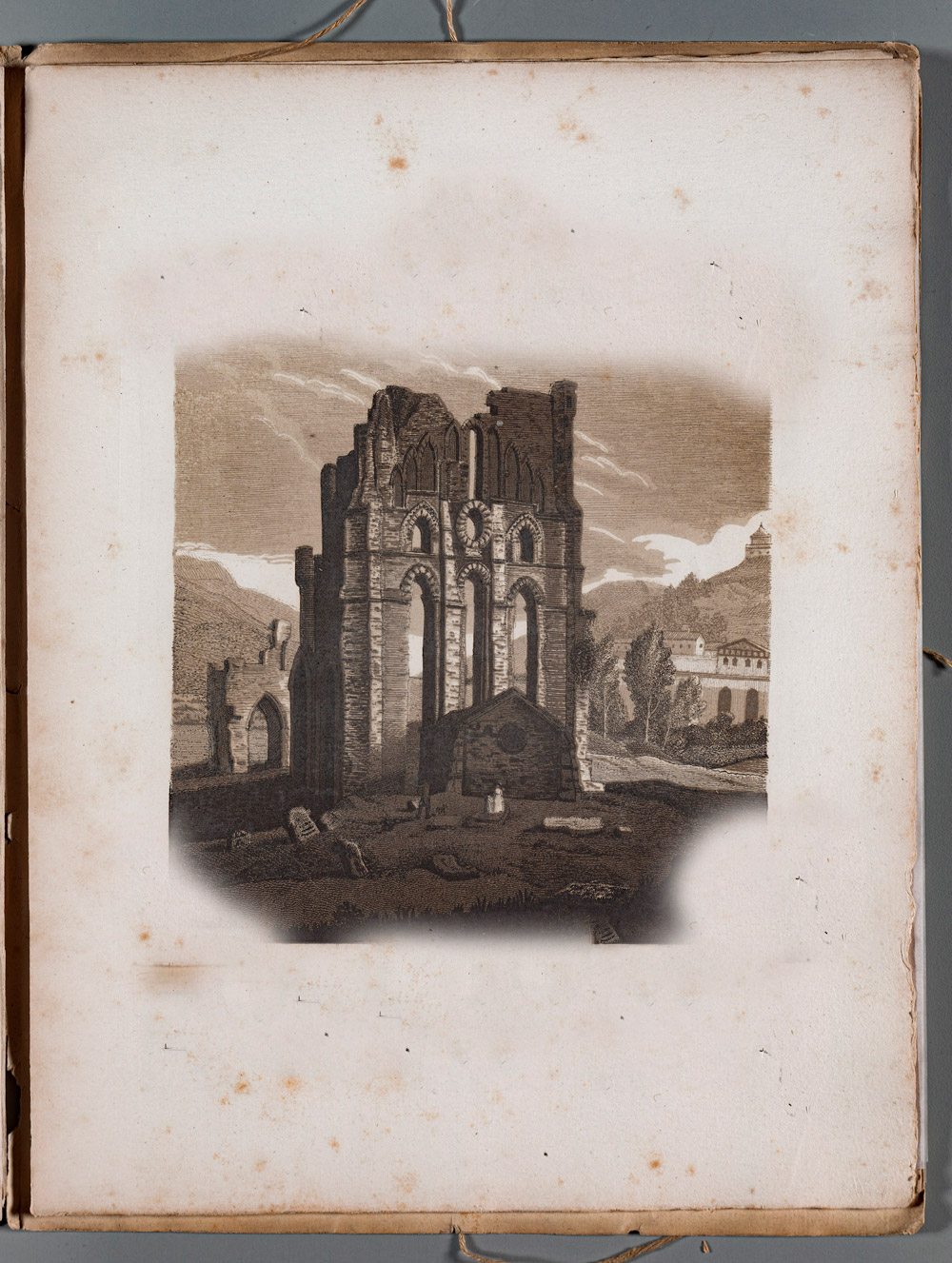
Alois Senefelder – The Art of Lithography, Cleveland Museum of Art. Public domain images.
The Art of Printing Art
In the 19th century, artists such as Goya, Daumier, Delacroix, Edvard Munch, Matisse, Braque, Picasso, Toulouse-Lautrec, Alphonse Mucha, and Andy Warhol elevated lithography to the highest level of artistic expression and quality.
The Art of Reproducing Art

Francisco José de Goya y Lucientes Public domain image
The Art of Printing Art


Delacroix, Edvard Munch, Toulouse-Lautrec, Alphonse Mucha—public domain images
However, it was not until the mid-20th century that the art world began to seriously engage with the art of printing art. Paris and Berlin began to introduce a concept as new as it was modernizing, initially known as the “new print”; or, in other words, the art of printing new forms, in what the world now knows as engravings, and they forever changed the face of print art.
Those were times when drawing reigned supreme; consequently, the field was dominated by line engravings—whether created using a burin, etching, or woodcut—a technique widely employed by the German Expressionists of the Die Brücke group, who were experts in depicting the human figure.


It was the logical response of what were then known as the “early avant-garde” movements, which made it clear that artists were inclined to improve and continue evolving in their vision of images through a quest that included tools, equipment, and technological mastery to provide the best foundation and support for the projects with which they hoped to fulfill their aspirations. The result was an improvement in technique and, with it, the discovery of new materials to perfect a product that, for the benefit of humanity, constitutes an invaluable legacy treasured in the world’s great museums thanks to the fact that it has been able to be printed and preserved through the use of various techniques. These are not original works, of course; yet some are of almost incalculable value.

The Vollard Suite, two special exhibitions: "Picasso in Canada" and "Picasso: Man & Beast. The Vollard Suite of Prints." Winnipeg Art Gallery, Manitoba (2017) Image in the public domain.
Such is the case with the Vollard Suite, a collection of 100 engravings by Picasso considered among the most important works of modern art; approximately 300 sets were produced, and perhaps fewer than 20 survive in their entirety. Worldwide, only 10 museums possess the entire collection; the last to acquire it, the British Museum, paid nearly one million pounds sterling for the set of works in 2011.
Printing art: a process with many names
The artistic process of creating and developing designs—using a medium and subsequently transferring them to a substrate—has undergone various changes that have made it increasingly precise and demanding, diversifying it to meet specific needs.
Screen printing
It is possibly the oldest printing technique, although it is not necessarily used to reproduce an existing work. Screen printing is usually used to create a specific final image that is reproduced almost identically multiple times. It has been known since 960 AD and is believed to have been invented by the Chinese Song Dynasty. The technique is still in use today and serves as a medium of expression in the graphic arts.

Wang Juzheng (Song), The Spinning Wheel Public domain image .
Lithography
It is considered a distinct artistic printing technique and is used to reproduce a drawing in print form, using a stone or a metal plate to transfer the artist’s work directly onto paper. Oil-based inks are applied to plates that are pressed onto paper; each plate yields a limited number of copies. If the print quality is outstanding and only a small number of editions have been produced, it holds significant value.

Stone used for lithographic printing featuring a Princeton University motif. Collection: Princeton University Library. Princeton University; Princeton, NJ. Image in the public domain.
Photomechanical Reproduction
It is the process of creating a photographic image that is printed with ink on paper rather than on a photosensitive material. Essentially, and although the term is very broad, any work of art reproduced by photomechanical means is a reproduction. It can be considered a first step in the transition from analog to the digital age. In the field of photomechanical reproduction, several processes are known, namely prepress, or photomechanics, which led to the use of large printing presses and special cameras that separated colors; offset printing, which utilized a three-cylinder system to improve print quality; and a variety of other techniques such as flexography, gravure, and wood engraving.

Photomechanical printing Public domain image .
Giclée Fine Art Printing
This is the highest-quality print, created from a digital file using sophisticated inkjet printers that produce prints with immense depth of contrast, vibrant colors, and excellent resolution.

A print created using the Giclée technique Giclée remain unchanged for over 100 years, making it the preferred method of illustrators, fine art photographers, and, in general, art connoisseurs who, as we have seen in our studio at COLOR3ARTE, enjoy not only the magnificent results but also our passion for the art of printing art.
