
Monoprints 1/1 — original, one-of-a-kind, and certified artwork
Monoprints are one-of-a-kind prints: a single combination of gesture, ink, and support gives rise to the image. Inspired by the explorations of Edgar Degas, Mary Cassatt and Paul Gauguin, these pieces bring the ambition to create truly unique graphic works into the present—and into the digital realm.
What is a monoprint?
A monoprint is the synthesis of a graphic work and a unique piece: starting from a single file—digital art, a photograph, or a digitization of a classic work—a single pigment-based Fine Art print (1/1) is produced, signed, certified, and backed by the artist’s written commitment never to produce another print with identical visual characteristics. Thus, the file becomes an art object, and that copy is established as an absolute and irreplaceable original.
At Color3arte we produce 1/1 monoprints to Fine Art standards for collectors: we manage archiving and color, select papers with maximum permanence, and perform a final verification with robust certification.
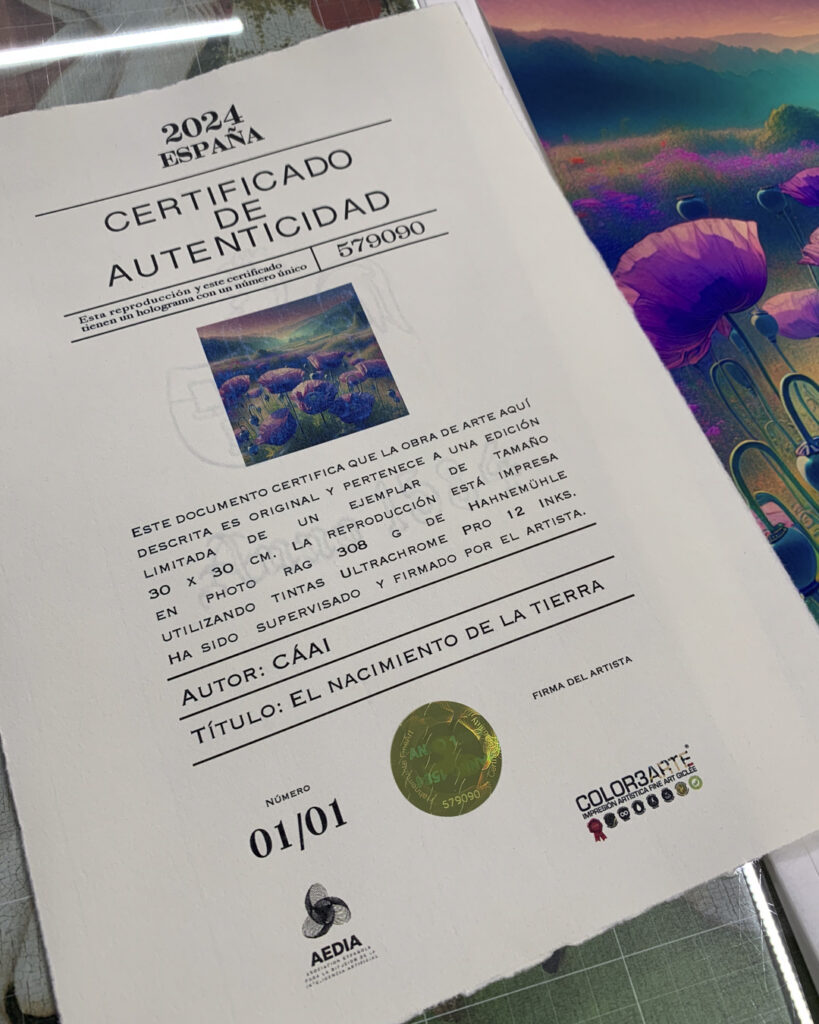
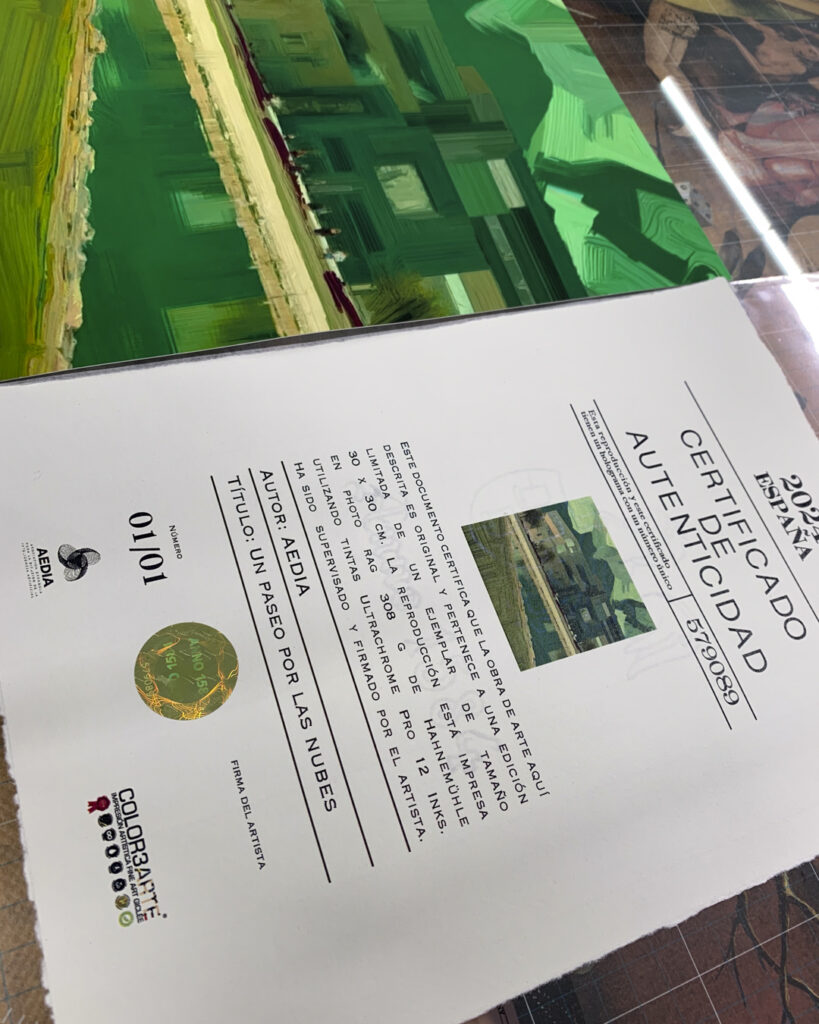
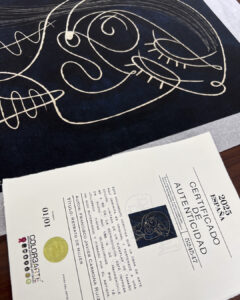
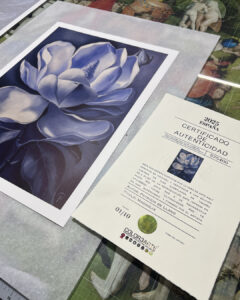
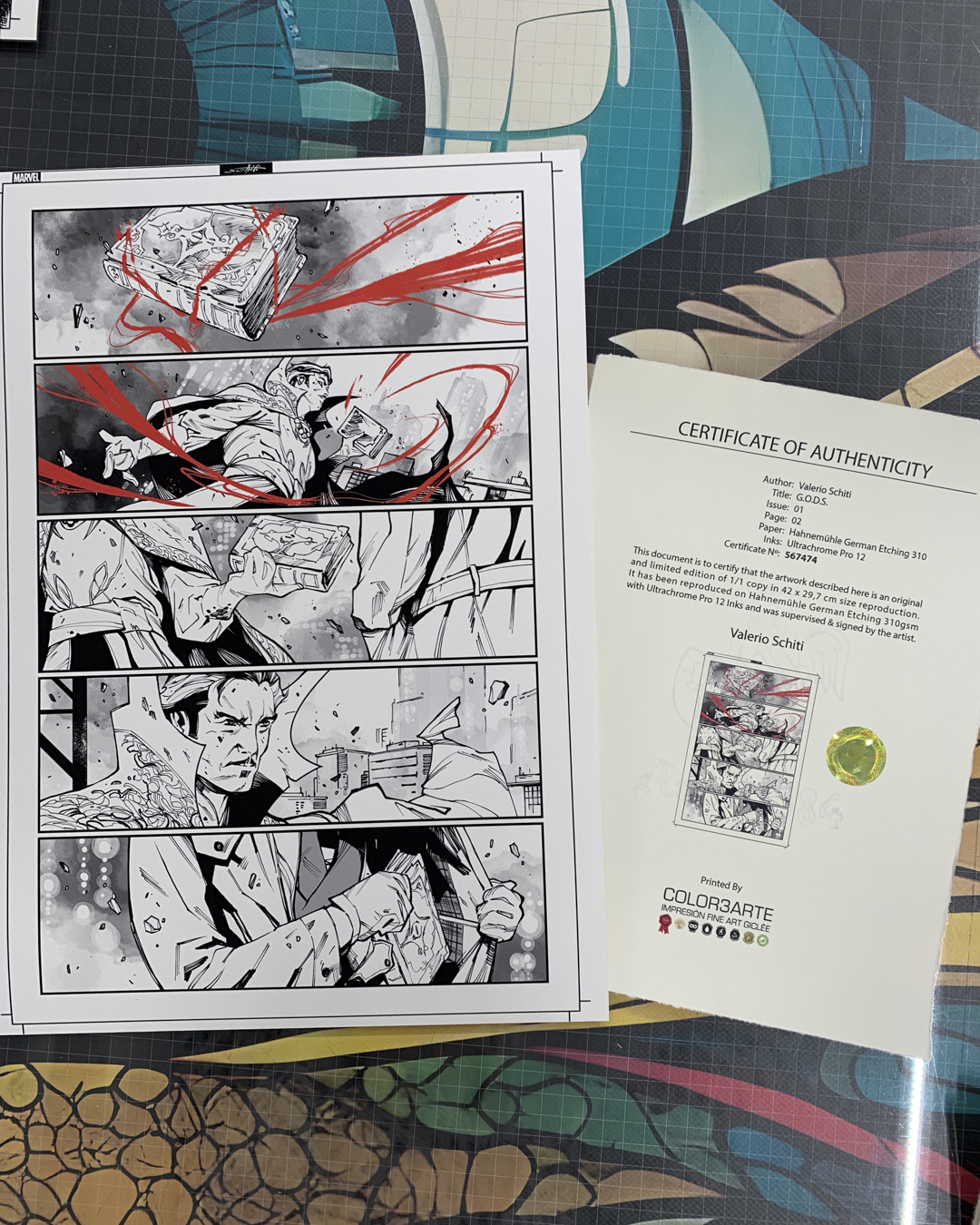
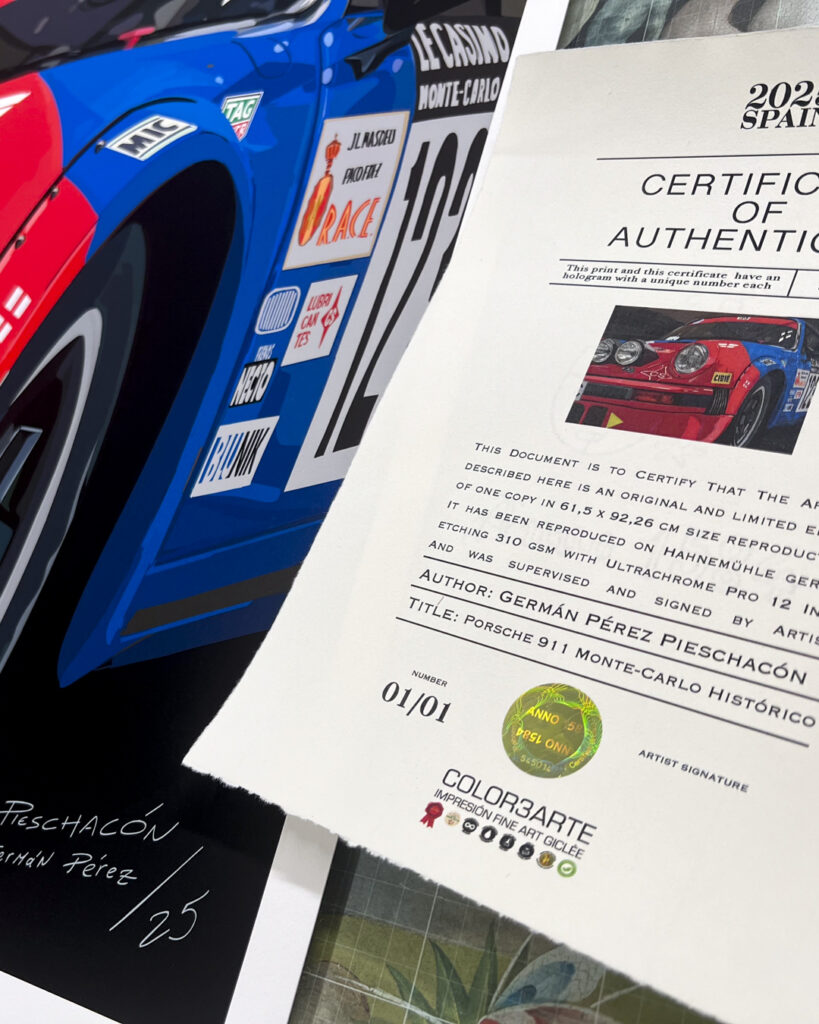
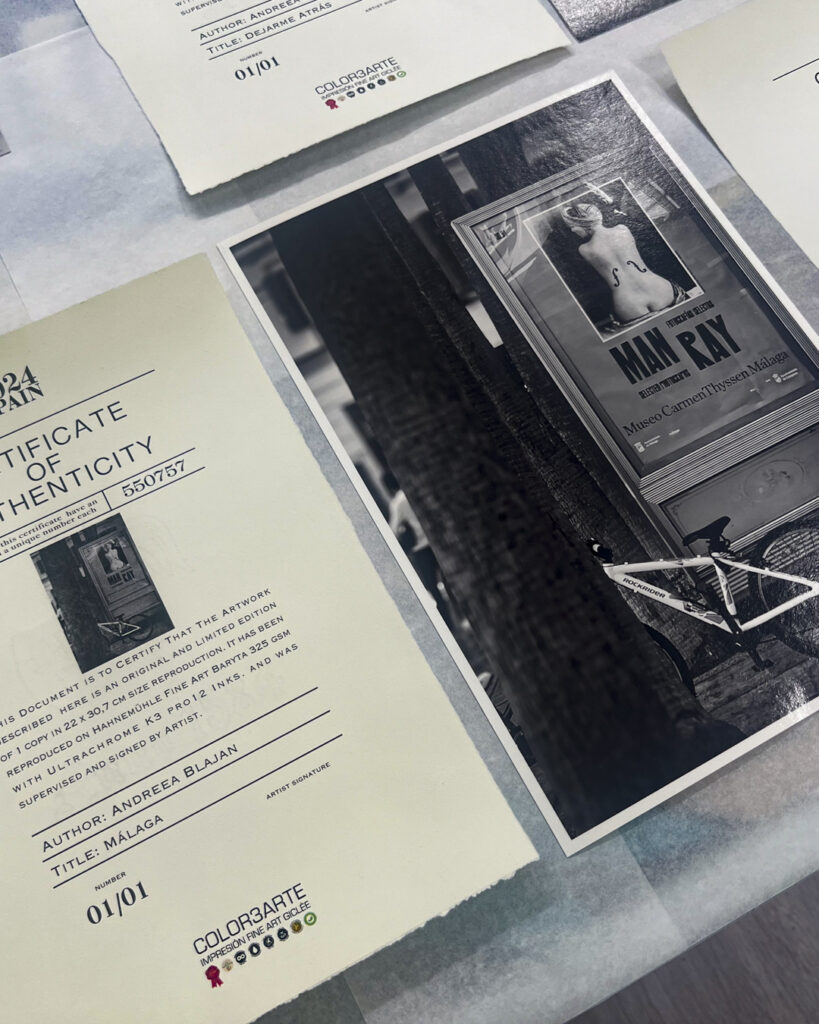
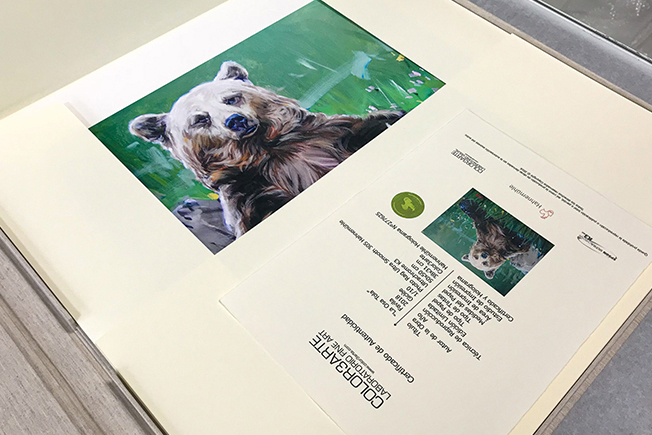

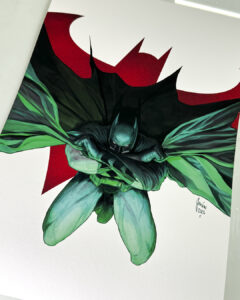

How a Fine Art Monoprint Is Produced at Color3arte
A serious monoprint isn't just a matter of "print and done." For a 1/1 edition to be coherent, consistent, and defensible, the workflow is based on four key steps.
1) File preparation
We examine what truly affects the final result: effective resolution, smooth gradients, color space consistency, and control of shadows and highlights to prevent color clumping or tonal breaks.
2) Color management and soft proofing
Here, we are looking for something very specific: to predict how the image will look on the chosen paper. Soft proofing allows us to make informed adjustments and maintain color accuracy while preserving the unique characteristics of the paper.
3) Choosing paper
Paper is not a “neutral medium.” It defines texture, microcontrast, apparent saturation, and, above all, the rendering of black. For monoprints, we use Hahnemühle vegan Fine Art papers, a particularly appealing option for those who also prioritize environmental sustainability.
4) Printing and final verification
The print is evaluated under proper lighting, and the key factors are assessed: uniformity, shadow detail, neutrality, and color consistency. The goal is a “gallery-quality” result: stable, clean, and defensible.
Hahnemühle Vegan Fine Art Paper: Quality, Durability, and Consistency
Hahnemühle that its papers are vegan and that this decision has been part of its manufacturing approach for decades: the sizing process does not use animal gelatin, but rather synthetic compounds.
In practice, for a monoprint, this means:
- Surface quality and texture: a genuine, unfinished look.
- Understanding color: texture and finish influence how the pigment “breathes.”
- Deep blacks and fine detail: invaluable in photography, painting, illustration, and comics.
- Archival approach: media selected for their stability and resistance to aging.
Water-based pigment inks: color, definition, and stability
For printing fine art monoprints using the giclée process, water-based pigment inks are the professional standard.
Why? Because they offer clean color , fine detail, and excellent stability when paired with the right fine art papers. The result is usually an image with greater impact: deep blacks, smooth transitions, and a more “artistic” look.
Epson, for example, describes UltraChrome PRO12 as a water-based pigment ink, a type of ink highly valued in fine art printing for its precision and archival quality.
Visible quality: color, deep blacks, and Dmax
In a monoprint, viewers usually notice two things above all else: the richness of the color and the depth of the black.
- Color: It’s not just about saturation; we’re talking about clarity, consistency, and smooth transitions.
- Black and Dmax: A good Dmax produces rich blacks without losing detail in the shadows. This enhances depth, readability, and drama.
Durability and preservation: a one-of-a-kind piece is built to last
A monoprint is conceived as a work of art, and its longevity depends on the whole. A few simple guidelines can make a big difference:
- Avoid direct sunlight or harsh lighting on the construction site.
- Maintain basic humidity and temperature control.
- Handle with gloves or by the clean edges.
- Framing with archival materials.
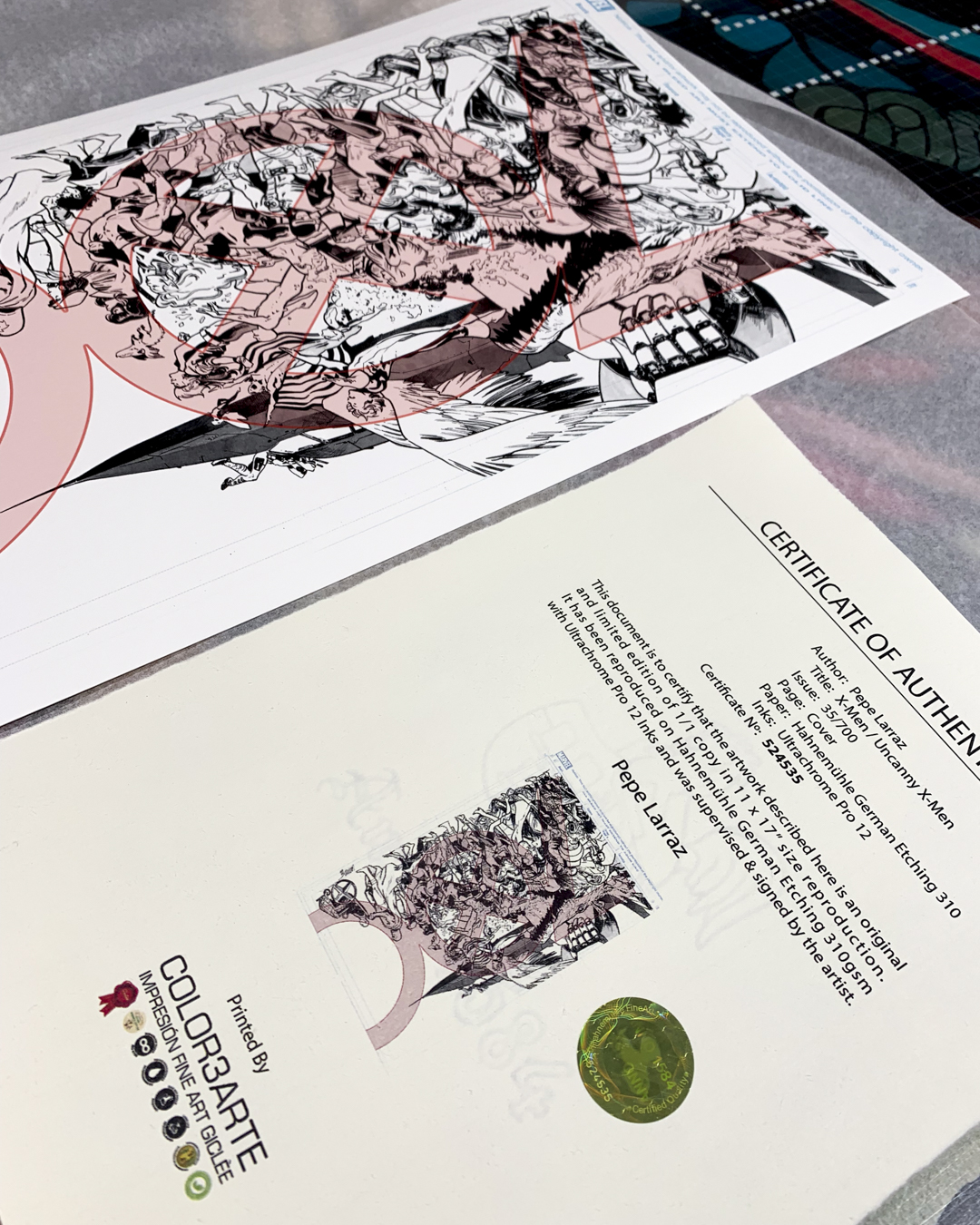
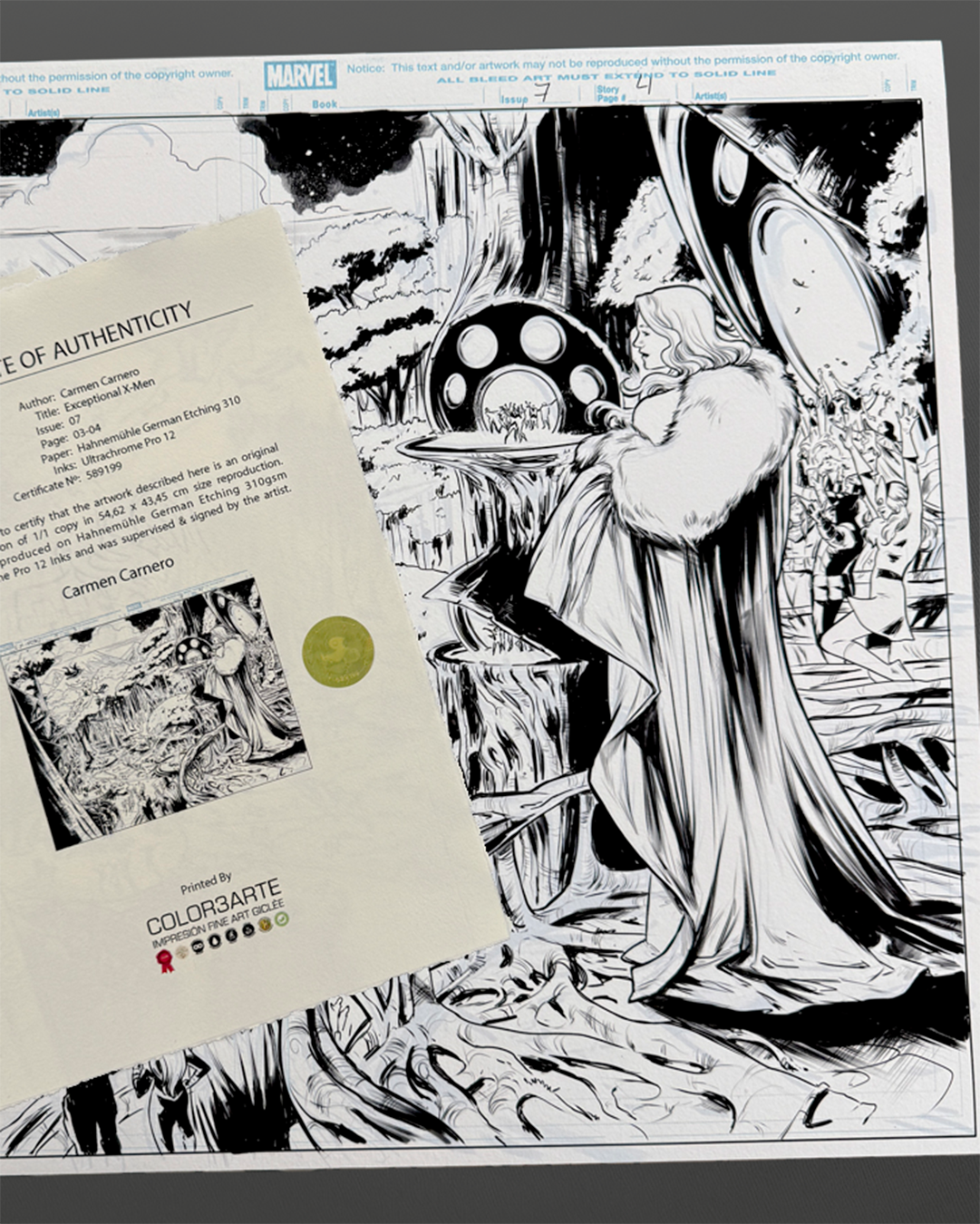
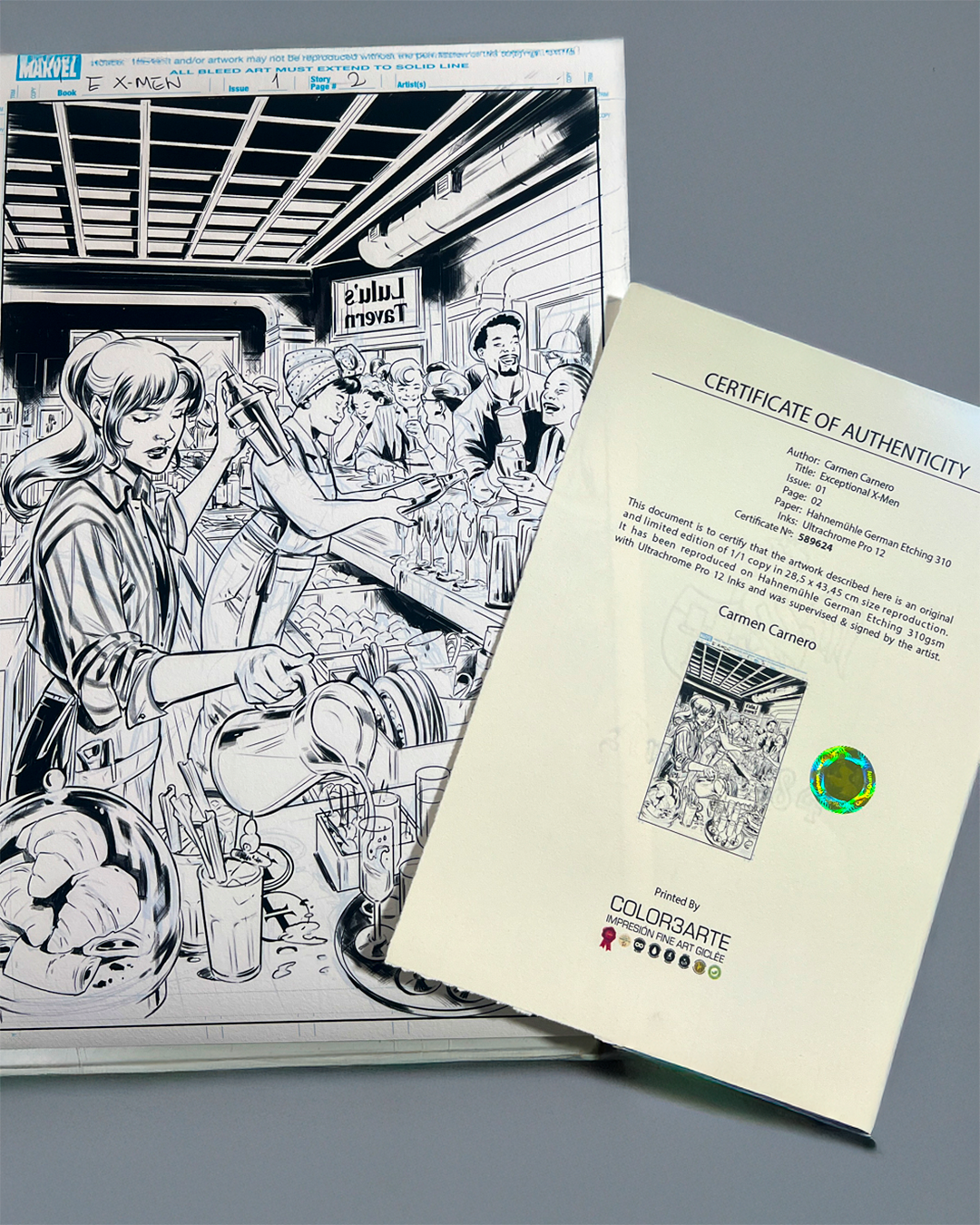
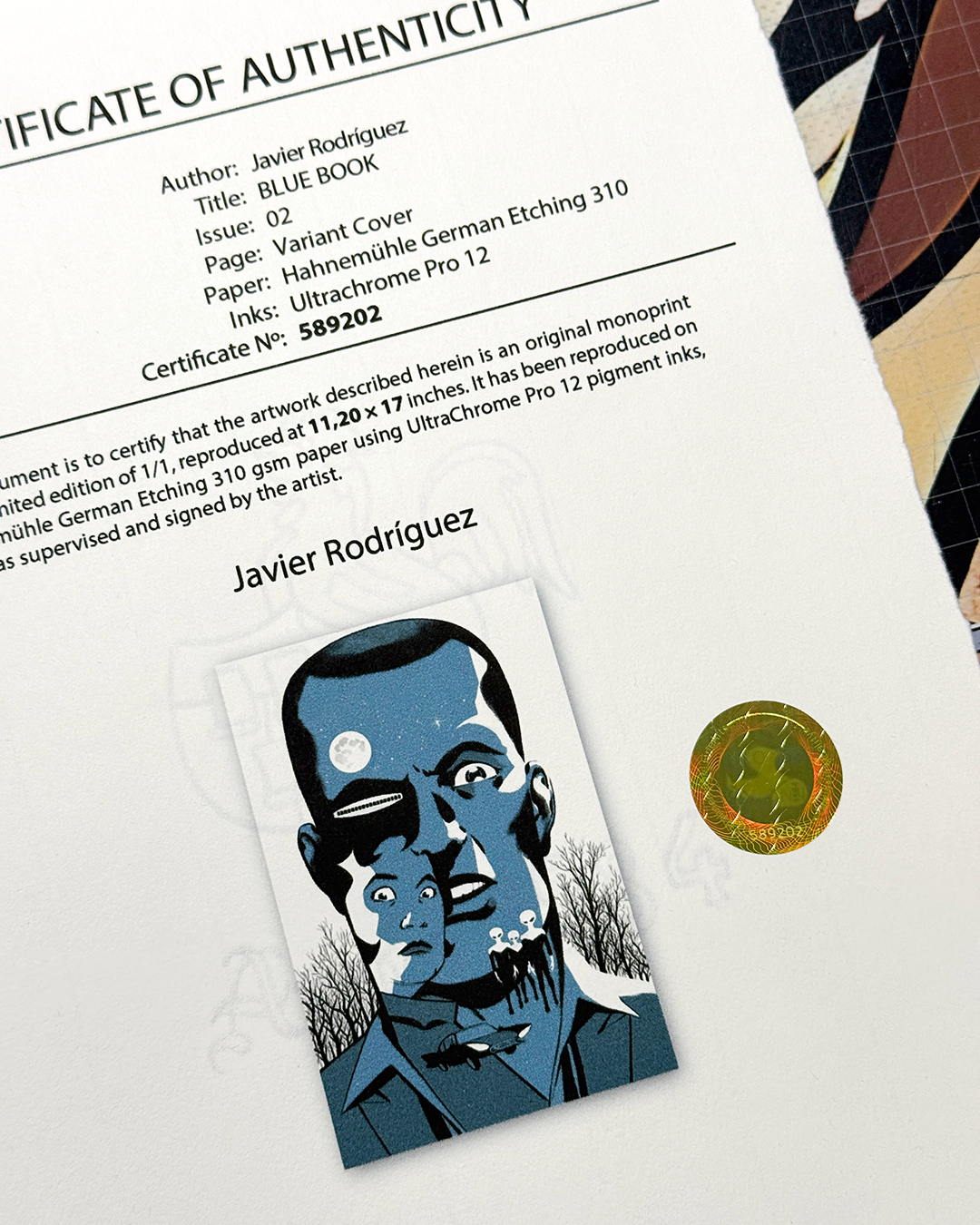
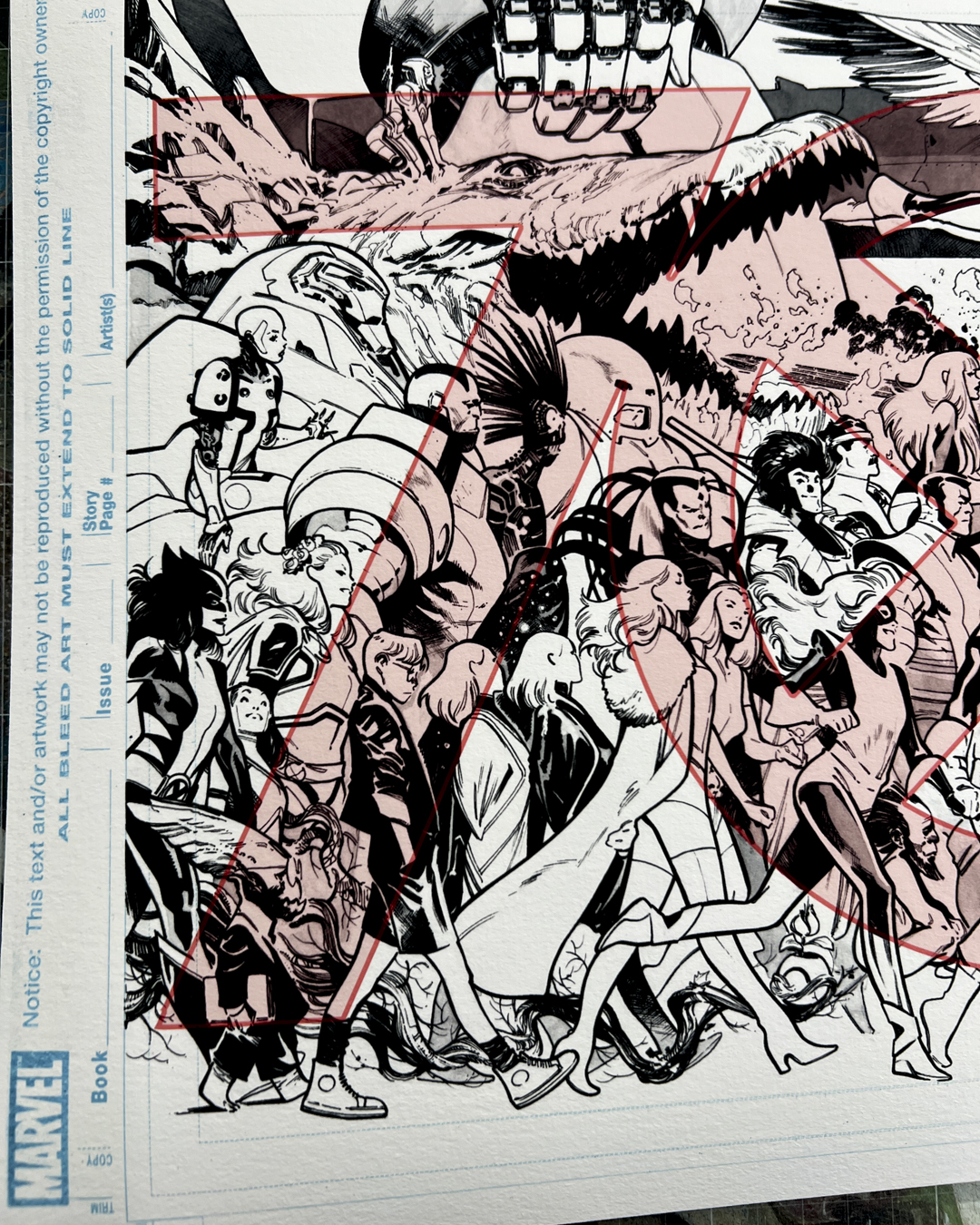
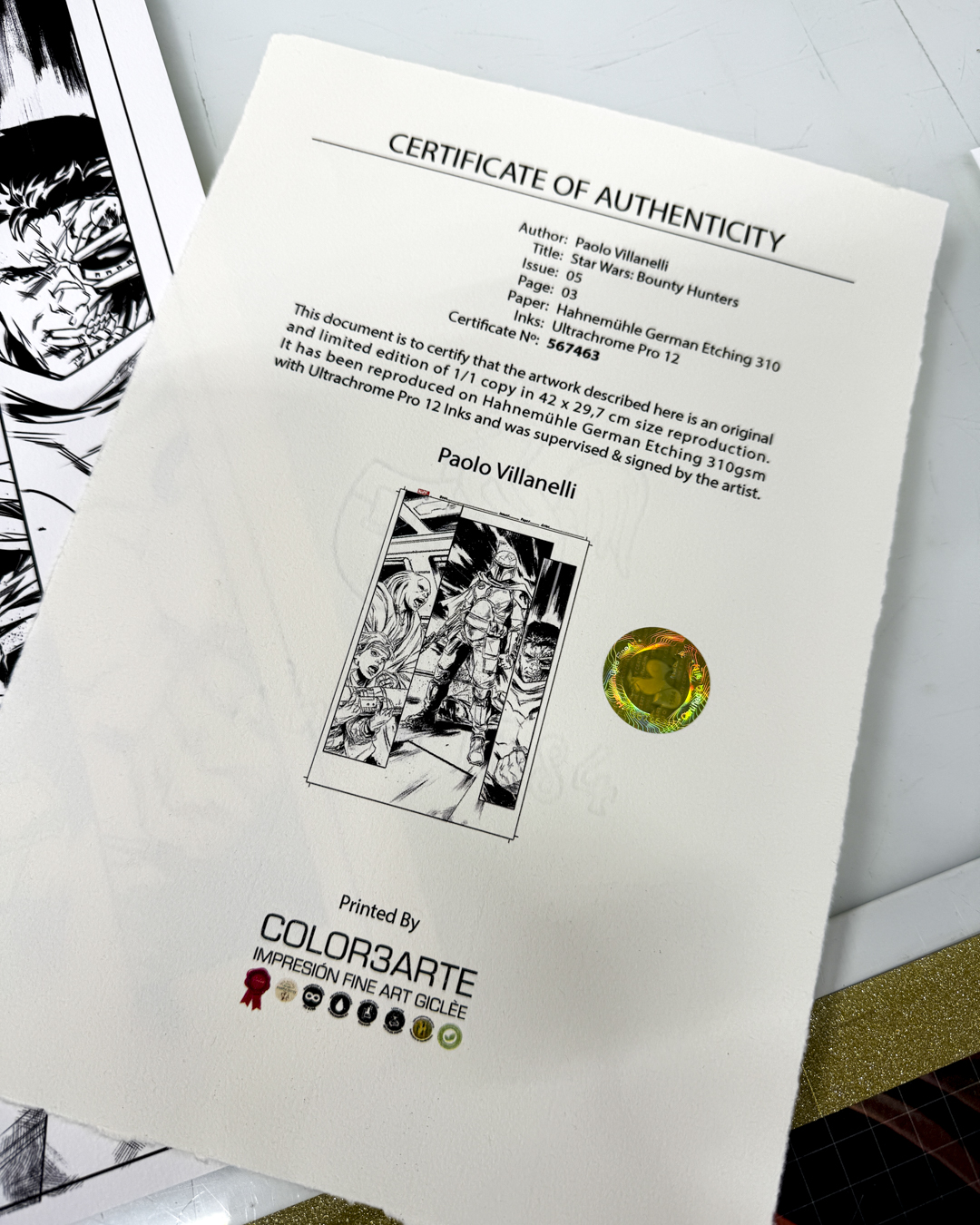
Monoprints
EThis 1/1 standard is particularly useful when the artwork circulates in demanding international collector markets. In this context, Color3arte® collaborates with various galleries, notably Green Room – Comic Art, an online gallery and agency specializing in original comic art and the representation of international artists.
The Greenroom (officially The Green Room – Comic Art) is an innovative online art gallery and agency representing comic book artists, founded in 2023 in San Sebastián (Spain). The project is led by Icíar Palacios Escobar, a cultural journalist and art manager with extensive experience, who serves as the gallery’s founder and director. Under her leadership, The Greenroom brings together a distinguished team of creators whose careers have developed primarily in the international comic book market, particularly in the U.S.; in fact, its artists are among the most recognized and promising in the field, producing some of the biggest hits each month for publishers such as DC Comics, Marvel, BOOM! Studios, Image Comics, and Dark Horse, among others.
Artists represented by The Green Room include:
Pepe Larraz – Javi Fernández – Álvaro Martínez Bueno – Belén Ortega – Aneke – David Lafuente – David López – Ángel Unzueta – Carmen Carnero – Fernando Blanco – Fernando Pasarín – Fran Galán – Gabriel H. Walta – Javier Rodríguez – Paolo Villanelli – Toni Fejzula – Valerio Schiti – Alex Nieto
Hahnemühle Papers
Hahnemühle Gold Certified Studio
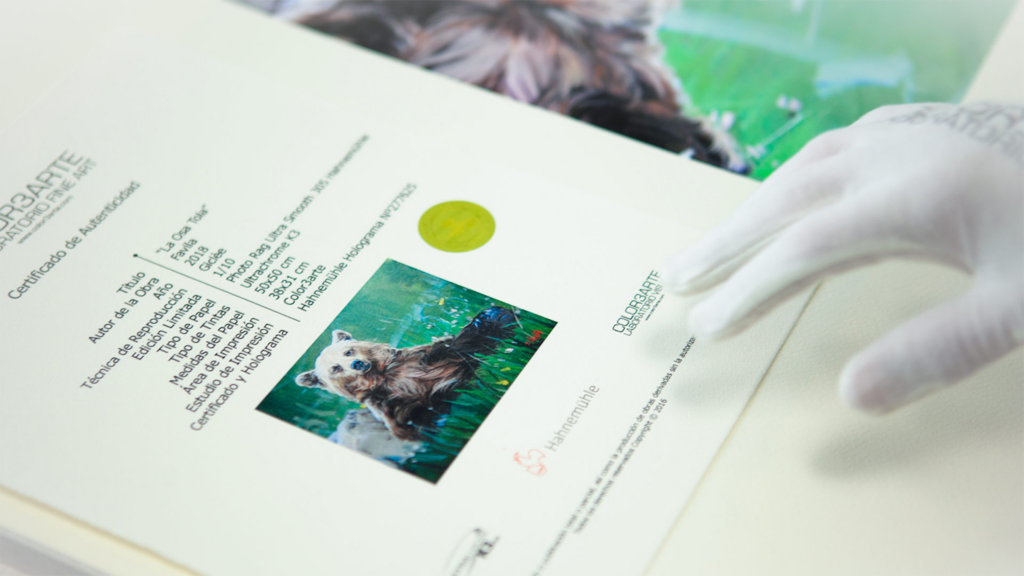
Hahnemühle Numbered Holographic Certificate

Digital Authentication Chip
Monoprint certification: Hahnemühle hologram Hahnemühle Digital Authentication Chip (NFC)
When a work is one-of-a-kind (1/1), certification isn’t just an “extra”—it’s part of the piece’s value and the collector’s peace of mind. You can choose one, the other, or both systems, depending on the level of protection and traceability you’re looking for.
Hahnemühle holographic certificate Hahnemühle numbered hologram)
A serialized hologram creates a direct physical link between the artwork and its documentation. It serves as a highly effective safeguard against the substitution, duplication, or misidentification of pieces. Additionally, if the artist chooses, they can register the artwork on My Art Registry (myartregistry.com) to verify its provenance and record the hologram number associated with the artwork.
CAD Digital Authentication Chip
The artwork can also incorporate an NFC chip (a discreet tag) that, when scanned with a smartphone, links to a verification page containing key details about the monoprint. This allows for:
-
Instant verification: check in seconds to make sure it's the right part.
-
Traceability: keeping information centralized and consistent.
-
Future protection: facilitating provenance verification, insurance, resale, or exhibition loans.

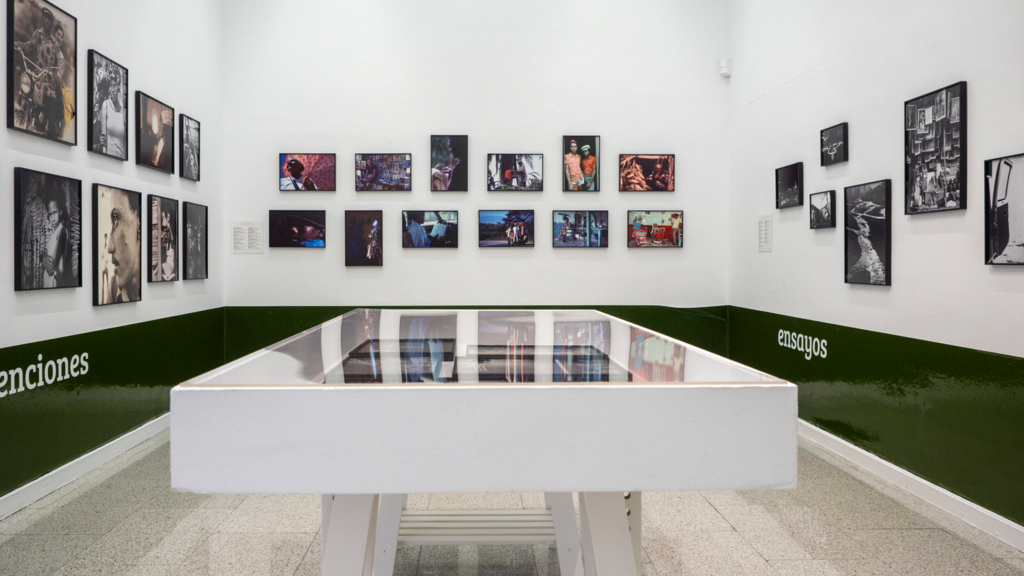
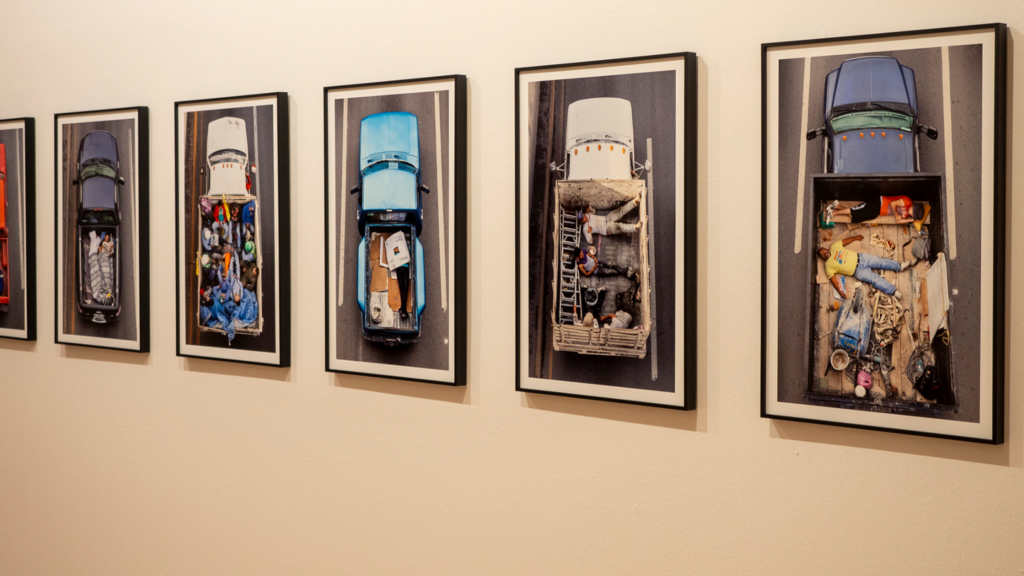
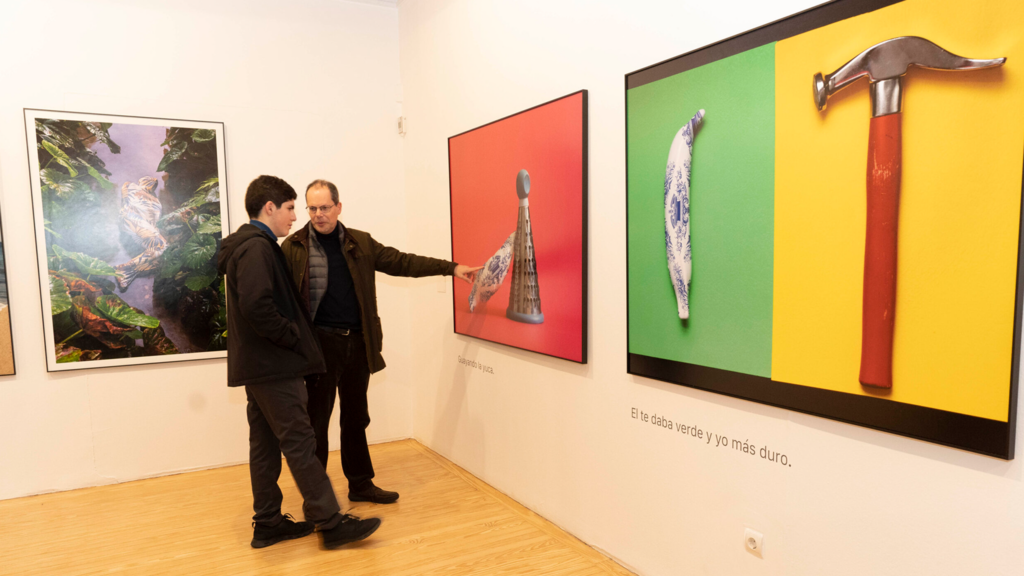
Monoprint does not belong to a single discipline: it is a framework for production and a commitment to edition. It involves creating an image as a unique piece (under defined conditions: size, medium, process) and backing it with verification and traceability.
That's why it works especially well in:
Fine Art Photography: The “Original” as a Commitment to a One-of-a-Kind Piece
In photography, a 1/1 monoprint means that the image will exist only once in the physical world, in a specific size and on a specific medium.
-
Verifiable exclusivity: 1/1 in that size and on that medium, with certification.
-
Material interpretation: Paper (and its finish) defines character and transforms the image into an object.
-
Technical consistency of the file: control of gradients, blacks, and color to ensure a consistent and defensible result.
Digital art brought into the physical world: when the digital file becomes a work of art
Digital illustration, digital painting, 3D, collage, hybrid or generated images: monoprinting allows for the creation of a final version as a one-of-a-kind object, using a fine art process and a certification system that protects both the artist and the collector.
-
Unambiguous realization: a single final piece, not a series.
-
Useful traceability: clear metadata and documentation associated with the work.
-
Market and Collection: facilitates provenance, insurance, resale, and loans.
Comics and Illustration: Why They Work So Well
In comics, black isn't just filler—it creates atmosphere, rhythm, and visual interest. Fine Art monoprints result in a one-of-a-kind piece with a tangible presence, making them particularly appealing for:
-
Alternative covers as a unique 1/1 edition.
-
Collectible character illustrations.
-
Iconic scenes reimagined or key narrative “moments.”
-
Colorways as one-of-a-kind pieces.
-
Items requiring subsequent manual processing.
Frequently Asked Questions About Monoprints (FAQ)
Frequently Asked Questions About Monoprints (FAQ)
Is a monoprint a limited edition?
No. A monoprint is 1/1: a one-of-a-kind final work. A limited edition involves multiple copies within a defined total number.
What is the best paper for a monoprint?
It depends on the look you're going for: matte cotton for a more "art-book" feel and a tactile experience; baryta for greater contrast and deeper blacks; Natural Line when you want to emphasize sustainability. The key is to choose the paper based on the image.
What does the Digital Authentication Chip (CAD) offer?
It provides immediate verification and traceability: a project record accessible via scan that ensures authenticity, security, and long-term documentation.
How to Order a 1/1 Monoprint
To begin a monoprint, the most efficient approach is to establish three things from the outset: the objective, the substrate, and the certification process. From there, the file is reviewed, the paper is selected, and the production process is finalized with a final check.
If the monoprint is intended for a collection or gallery, it is advisable to include a conservation plan from the outset.
Contact / Quote
If you’d like to create a fully certified 1/1 monoprint, the Color3arte® team can advise you on paper, printing, and the final finish.
Color3arte® — Oviedo (Asturias)
Email:color3arte
Tel.: +34 985 987 984 / Mobile: +34 627 795 604
Address: Calle Manuel Fernández Avello, 15, Ground Floor, Unit A, 33011 Oviedo, Asturias

